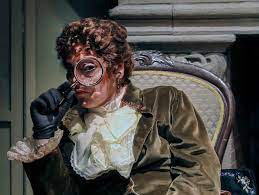
âYou can reach me at The Royal Grenadier Hotelâ â and he was gone. Leaving her to muse ruefully on all these new positional changes in their relationship.
Hadnât she always leaned on his preferences and decisiveness? Was it possible that â after all â she HAD masked her true self from her husband and only now was it beginning to emerge? No. She had masked her true self from herself. And it was understandable â the future was aspirational â one yearned to become a âcertain somebody.â It was only later that you found some doors were closed â always would be closed because you yourself really didnât want them. Really didnât.
Did this work for men as well, she wondered? Did they know their real selves so little? Ian had been raised with certain expectations â to ârise in the world,â for example â which he was fulfilling. But women were encouraged to adapt in a way men were not and so inevitably, they looked for someone to adapt to.
If Ianâs real, poetic self had yet to emerge she was certain the revelation would take a very long time. It could only happen after he had tried his dream of castle ownership, BBC employment and âpartying with the right peopleâ â and found it wanting. It could be, Scarlet realized, a very long wait.
She had thought she knew him so well that she could have said exactly what he was thinking at any given moment and that made him the only man for her. But she was beginning to realize that no couple can really know each other because the challenges of marriage itself â of parenthood â must mold their characters. An unchanged soul would be shallow and undesirable for that very reason. They had always been on a journey; it remained to be seen whether they could travel together.
She recalled Ian on their very first date saying as she dithered over Indian food, âDonât over-cerebrate. Lean on me. Thatâs what Iâm here for.â
Those words â so erotic at the time â now seemed appalling. Naturally, it wasnât just his words but his face and body, his gorgeously explosive masculinity, the testosterone that dripped off him like cologne â turning both her head and heart. She had suddenly felt confident of reveling in the utter relaxation she required for erotic satisfaction. She could float â she could surrender.
Now she was finding out what exactly what it was she had surrendered to. They had both used her âAmerican optimismâ as fuel to stabilize his âEnglish pessimismâ. She had literally been the making of him. And she had given herself to the enjoyment of every moment.
Until now. Now she felt unpleasantly certain that he had dismissed her from his mind as he boarded the train. He was whistling. Whistling was his âtellâ. Long ago heâd criticized her âbadâ poker face, that American refusal to create a social personality â calling out her âgiveawaysâ of furrowed brow and trembling lip. Because he positioned himself as the expert it hadnât seemed appropriate to explain to him that he had âtellsâ of his own â an overly rigid âpoker faceâ for example! Only used while playing poker! And the whistling. That was worse. It meant he was going hunting. And looking forward to it.
Having Ian gone was a relief in at least one way â no regular meals. Much easier to diet — âslimmingâ the Brits called it. Ian loved fried breakfasts, relished cheese, desired iced cakes, dreamed about âold-fashioned English teasâ with the âtop of the creamâ, demanded a constant supply of sandwiches, sweeties and savories. He considered a castle owner entitled to nuts served with his port. It was dangerous (and expensive!) keeping up with him and Scarlet knew she darenât try. She couldnât eat any of it and lose this bulky baby weight. Since she couldnât match him indulgence for indulgence she might as well make up her mind to monastic living.
Ian was a tall man, a big man, perhaps running a bit to fat these days, in the belly, in the chin, but to Scarletâs loving eyes he was only that much more powerful and desirable now that his solid middle matched his massive shoulders.
The easiest things to give up were alcohol and meat: chocolate was the stumbling block. She treasured that cup of cocoa at bedtime too much to surrender it. Another American habit! She had been sleeping badly, listening to Nicholas cycling through his moods. She required comfort to confront these cooling nights.
The day after Ian left it snowed â the first snow she had seen in England, a country which had previously been uniformly cold, wet, dank and gray. This snow was white, full, American in its lushness. But who could she share it with?
The Royal Grenadier had no telephones in rooms, so she left messages that were never returned. Finally, after four days, a telegram.
âGood news. Home 22 6:15. Love, Ianâ.
Scarlet sighed with relief. On the 23rd it would be six weeks since Nicholasâ birth. She had marked that calendar date with a rose.
On the very day Scarlet sent Candiâs telegram, Ian suddenly announced he must go up to London. Scarlet battled hard to suppress her instant jealousy. Jealousy placed her in an invidious position â the Ball and Chain carping wife. Who WOULDNâT want to escape from that? Ian argued that he had appointments about âemployment optionsâ, but Scarlet knew and stated that heâd received no calls or mail.
âOh no?â heâd returned loftily. Heâd always had these appointments, he simply didnât tell Scarlet because âshe would react like thisâ.
Scarlet was stumped. Stymied. How on earth had this happened? Theyâd been so happy just a couple of months ago, when they moved in â theyâd always been a happy, get-along couple. The envy of their friends. Suddenly he had become a âhigh-flierâ and she was a stuck at home as The Complainer! Why, oh why hadnât she listened to India, her own Sister Anne, who warned her about Wives Stuck In the Country?
The seeming inevitability of rigid roles loomed over them. There was the âhardworking long-distance husbandâ who needed and deserved whatever relaxation, rest and entertainment he could find in The Big City versus the âtrapped, bitter drudgeâ of a wife who didnât appreciate all sheâd been given and always wanted more. It was the âbattle of the sexesâ theyâd read about (and laughed over) during courtship. It could never apply to self-aware, intelligent artists: lucky people who knew where to find and how to value âtrue loveâ.
Charming as Wyvern House was slowly becoming, it could never be worth a loss this devastating. Scarlet was facing nothing less than the total corruption of her love relationship. Worst of all, they couldnât discuss it. She darenât even mention it. She knew with absolute certainty that Ian would blame the baby, not the house! Wouldnât he be simply playing to âtypeâ? And wouldnât everyone agree with him? Wasnât this what the âworldâ insisted always happened to everyone else? The mother fell in love with the baby and the father, feeling the loss, sought attention elsewhere. He became freer, she became more burdened, then the fights began. Sheâd never â and Ian said HEâD never â thought any of this could possibly apply to them!
He changed, not me, thought Scarlet mutinously. Suddenly his mind was closed to her. It happened the instant we walked into this house. But how could she have stopped Ian from buying a house sheâd neither heard of nor seen? Talk about inevitability! Theyâd planned her pregnancy together but the house idea was his alone. Although when Scarlet thought honestly about it, hadnât agreed they needed more space? It was a hopeless mess.
Scarlet felt uncomfortable requesting fidelity from her husband considering they were banned from having sex. Although she couldnât feel confident in his devotion, she did ask him â âwill you be true to me?â
His horrible answer was, âWhat do you think?â Either he scorned her for raising the question, or he dared her to tell him the truth, which was, that she thought he wouldnât be. But her pride couldnât allow her to beg from this stranger. Who was he? The more responsibilities Ian had, the more different he became from the playful, imaginative student she had married, and the more he seemed to be turning into a hostile alien driven by unreadable compulsions.
But mightnât he say the same of her? She kept secrets, too.
For example, she had originally considered Nicholas would have better childhood in the country. Ian considered it âAmericanâ and âsuburbanâ (both pejoratives) to dread the dirt and despair, the ârat-raceâ of big cities and to conjure up instead a green Eden where Nicholas could grow slowly, while studying the pastâs best minds.
Scarlet had known she must eventually brace herself to fight the English craziness of sending eight year old boys away to boarding school but in the old days she had enough confidence in herself and her marriage to feel this was a battle she might win.
Now she saw he considered marriage a partnership only when the wife agrees with her husband. When she didnât, it was easier to ignore her.
Before the most recent trip to London she had taken care to mark him with her scent so to speak, to bathe him in her love, remind him of their passion, but after the guest weekend she felt too dispirited and if she must be honest, too angry at his cultivation of someone like Candi and his apparent willingness to use her as a goad against his own wife. How dare he! So disloyal! Her itch to scratch his face was decidedly de-rousing.
He was claiming the Holy Grail â a proffered permanence at the BBC. According to him, âeverybody knewâ television was THE modern workplace nowadays for money and advancement. Scarlet hadnât cared for the BBC people she had met. They seemed so relentlessly â even aggressively, proudly âunpoeticâ. Couldnât Ian see that these people quashed rather than enhanced creativity? But such concepts only made Ian angrier. Their new obligations were expensive. She couldnât contest that.
She found herself yearning hopelessly for the carefree days of courtship and poverty â a honeymoon in Spain for pennies a day â a dingy flat with a toilet on the landing. Too late for such nostalgia. Those days were pre-Nicholas, and now that he was here he needed the best care possible. The universe required Nicholas. It was Scarletâs deepest belief that Nicholas needed to be born. One could even argue that Scarlet needed to become a mother, for Nicholasâ sake. Everything Ian knew of this atavism he instinctively despised. She was certain he considered Wyvern House more important than his son.
A cynic would say this was the oldest Tale Ever Told. Men and women had different investments in children. Who was that American scientist in the thirties who wrote about how important any particular man was to a woman, and how unimportant any particular woman was to a man? Men didnât comprehend the process of giving birth, didnât need to because in biological fact they could father hundreds of children every year. Women, on the other hand, must invest years in bringing up a mere handful of children.
Scarlet certainly didnât want to hash any of this out with Ian. Back in their courting days, he was interested in her thoughts and they could talk about anything; now he seemed resolved on turning her own words into weapons against her.
One morning Ian galvanized her with a totally unexpected argument.
âYou know, if I got this job, weâd have to get a place in town. What a Christmas that would be!â This was casually stated while he was looking in the mirror, tying his tie.
Scarletâs mouth fell open. âA flat in town AND a house in the country?â
âWhy not? Other people do it.â
They certainly did: rich people. Ian did have that thousand pounds â if he hadnât already used it to stave off debts. Theyâd already agreed to skip Christmas presents in the face of all these expenses â but a shared apartment hunt would be a gift in itself!
Wouldnât that be the perfect solution? Had she jumped too fast to all her negative conclusions? Her face burned â was he right when he called her âThe Doomsayer?â
He didnât need the mirror to tie his tie â he was using it to study her face. She had never been one who aspired to mask her emotions â especially from her husband! But this time she really tried. In her mind she saw their lives unspooled â dinners with fake people like Candi, hours spent rushing from town to country and back again, passing the baby between them and multiple caregivers as they sought to keep a precarious footing in the world of âthe lucky onesâ â was that really the life she wanted? She felt certain that even in the midst of these complex preoccupations, people found time to feel lonely and hopeless. Equally she felt certain that such a busy chatelaine would never write a worthwhile word.
Money was universally supposed to solve all dilemmas. She was beginning to see that wasnât true. And yet â if she neednât scrabble for a job herself, a flat in town would solve the education dilemma. And so she said,
âSounds wonderful,â and was touched when he sighed with visible relief. He still cared what she thought!
âI have never been so happy to say goodbye to people,â said Scarlet when at last she and Ian were alone and driving home.
âTheyâre not so bad,â said Ian smugly. âYou must appreciate Candiâs determination to have a good time. Quite the little Cleopatra, isnât she?â
âDonât fall,â said Scarlet sharply and her husband answered, âAs if I would sink so low! Sheâs not my class at all.â
How Scarlet wished heâd said, âYOUR class.â Did he even think of his wife as sexy? Desirable? Feminine? HUMAN, any longer? Instead she asked,
âWhy on earth did we invite them, then?â
And Ian answered complacently, âJust an experiment to get your rusty skills up to speed. One must make plenty of daring social experiments to test the field.â
Scarlet was struggling with the horror of that comment when just at that moment Nicholas woke up mightily discontented with everything about his life, requiring Scarlet to crawl into the back seat and minister to the one male who indisputably put her first.
On Wednesday, the mail contained two thank you letters â one addressed to each of them. She couldnât bear waiting â she had to open Ianâs, unfolding a sheet of empty pink letter paper stiff as cardboard and ornamented with a single gold âCâ â and a shower of rose petals. Not a word.
Candi hadnât written a single word! Scarlet was humiliated to have to pick up every damn petal â there were thirty-six of them. She took them into Ianâs office where he was working on his accounts (or, as he called it âcooking the booksâ. It was only his own father he was fooling.)
âThis is yours,â she said, dumping them in his lap. âSorry. I thought it was for the both of us.â He just laughed.
Scarletâs letter was more substantial, less suggestive and if that were possible, even more aversive. MORE cards from the Escarpa Gallery, fashion trunk show invitations, fulsomely effusive words about the weekend and an onionskin pattern drawing for a stained-glass window âpicking out the colors of your studyâ â some kind of hunting scene.
Scarlet couldnât focus on the huntsman picture, she was so appalled by this barrage. She knew Candi wanted her to think Ian had taken her privately up to Scarletâs study. Damn the woman! And in the guise of offering this idiotic âgiftâ she was literally daring Scarlet to complain.
âWeâll never invite them back,â Scarlet thought. But did she actually have that much power? She could already hear Ianâs voice insisting they must entertain, make friends, cultivate acquaintanceships with people they didnât like at all. Why had she done this to herself? She should have realized a castle came with a heavy psychic as well as financial mortgage.
She toyed with the idea of needing to be âin Londonâ on weekends when the unbearable was expected â but didnât that cede the field to Candi? Wouldnât she love to play hostess? Back in their London days Scarlet considered their coupledom as a unit, indissoluble, because they loved each other and wanted and valued the same things. It just didnât feel true anymore. She felt embarrassed and humiliated by the pink honeymoon cloud that once has obscured the entire sky.
She shouldnât catastrophize. She should play it cleverly. How many women like Candi were there in the world? Couldnât she figure out some way to keep them at bay? She needed to come up with some clever way to tell Candi she didnât want this damn âgift.â
Should she say she hated modern glass? Loathed hunting scenes? Something would occur to her but first things first: she must order stationery bearing the name Mrs. Ian Wye. No, no, that wouldnât do â anyone could be Mrs. Ian Wye. Mrs. Scarlet Wye sounded as if they were already divorced. Ian and Scarlet Wye? That was so American â she could only get away with it if Ian never saw it. Her maiden name was the name she wrote under â Scarlet Stavenger â her âbusiness nameâ she supposed â but taking away her married name seemed to concede the field. Scarlet Stavenger Wye â that was what was required.
Oakhampton Stationers told her the order couldnât be ready for two weeks at least, so she sent a telegram to Candiâs gallery.
âNo stained glass for me thank you â appreciate the thought.â
They all rose late. David insisted heâd slept âvery wellâ but Ianâs eyes were shuttered against Scarletâs inquiring look and Candi seemed smugly triumphant. It went against Scarletâs grain to question them but if you didnât tell foreign sexual adventuresses that your husband was off limits, how could they be expected to know? Candiâs barbed words – âglad to know another couple with a truly modern relationshipâ â came back to haunt her like some sly promotion of infidelity as sophisticated, international and superior. Scarlet felt certain husband David wasnât on board with that.
They drove to Oakhampton after a late and hasty Continental breakfast prepared by Ian, (wonder of wonders) â the âgirlsâ in the back of the estate wagon with Nick in his carrycot between them. Scarlet struggled to find words that would be politic yet reproving, fearing that if she missed her chance, sheâd be silenced forever.
But Candi forestalled her.
âYou must come up to London soon,â she gushed, âNow that you have a nanny.â Scarlet struggled with the concept of Fern elevated to this pinnacle while Candi hurried on; âSo we can have a real heart to heart.â
Which of us is being courted now? Wondered Scarlet. A nightmare world appeared to her inner eye where her personal good fortune; talent, beauty, husband, house, son â laid her open to invasion by this succubus scheming to supplant her.
Candi placed a cold hand with terrifyingly long, red lacquered nails on Scarletâs hot, stubby, hang-nailed paw.
âI have discounts at all the best places. Now that you have your figure back we must suit you out.â âLovely,â quivered Scarlet, revolted by virtually everything about this patronizing sentence. She knew immediately that the truth was of no interest to Candi, who sought always to perpetrate a façade, and who took it for granted other people did too. She seemed confident Scarlet would never correct her, never insist that she was large, baggy and leaking milk in all directions. Her presentable caftan at the restaurant for dinner out could be considered âmaternity wear.â She would rather die than ever shop with Candi, didnât want to resemble her and hadnât planned to buy anything new until Nicholas was weaned.
But she felt a horrid certainty that Ian would side with Candi; that one must always âput on a showâ. Was she being penny wise and husband foolish? Something to consider. Perhaps she could spring for one outfit â but certainly not alongside Candi! Tatiana had a pair of velvet toreador pants Scarlet coveted. âDivorce insuranceâ – distasteful as that might be. And she desperately needed a warm winter coat â something better than this shabby red anorak she wore everywhere.
Breakfast had been so late and Ianâs porridge was so stomach-churning nobody could think of food or even a cup of tea at the cafĂŠ. In desperation, Scarlet suggested visiting the bookshop instead to purchase âsomething to read on the trainâ and all agreed with this idea.
The Fruitful Browser was fortunately open Sundays. It might specialize in old, antique and âusedâ books but there is no such thing as a âused ideaâ. Francesca even offered a respectable cup of coffee which she called, charmingly, âcafĂŠ americaine.â She gave Scarletâs guests â and then Scarlet â a look that could only be described as âconspiratorial.â Baby Nicholas cooperated by staying sound asleep locked safely in the car.
âLiterature by the yard! I see!â said Candi, who appeared personally insulted by the very concept of used books. âBut I suppose if youâve got shelves to fillâ – until Ian commented,
âHereâs a lovely section of pocket Trollopes.â
Thatâs what Candi was, thought Scarlet. A âpocket trollop!â
Seemingly Candi wanted anything Ian wanted. Her acquisitive eyes lit with lust.
Scarlet left them to it while she and David happily perused the Golden Age of Crime novels – tuppence a copy. David was thrilled to find a series Scarlet had never even heard of.
âOur Miss Clew,â he said, âThese are glorious. I think there were only ever a bakerâs dozen and Iâve been missing five! Here they all are!â To Scarlet he hissed conspiratorially, âDonât tell. They could sell the full set for substantially more.â
Scarlet had to assume Francesca knew her business. In any event, she personally dropped a guinea in this store on her every Oakhampton shopping trip. She snapped up the five David didnât need.
âI see you love Miss Clew,â Francesca remarked, adding up their purchases. âThey really must issue reprints â these inexpensive editions â ârailwayâ they called them – fall to tatters far too soon.â
Scarlet could only agree â her copies appeared to be restored with what she, as a new homeowner, recognized as friction tape.
Candi had chosen a first edition of Frank Harrisâ Life and Loves which, horribly, Ian insisted on purchasing for her.
âI shall have to think up a really special bread and butter present,â said Candi. âThis has been the most wonderful weekend of my life.â
Ian continued to surprise her. He stood looking down on her humorously, but distantly, as if he were visiting from somewhere else. He had a long smooth patter prepared about how he had occupied himself while in London: cultivating television executives, meeting the right people, offering services, making pitches, beingâŚhimself.
Scarlet found this naked pursuit of cash so repellant that she asked no questions, accepting it at face value. What else could she do? They needed money to live. She had agreed to live in this house, she had willingly added an extra mouth to feed. He was her husband, the father of her baby and she needed to accept and support his ideas. In aid of this charm offensive, Ian informed her that he had invited weekend guests.
âShow off your accomplishments,â he oozed, âLet them see weâre a package deal.â To Scarlet it seemed strangely as if his sudden need of her hostessing shifted the power balance between them.
Scarlet wished heâd waited for Nicholas to recover from night-screaming colic before entertaining. She also knew he didnât want her to become the kind of woman who talked endlessly about babyâs digestive and bowel complaints. Ian had planned a life above the muck and so far she had failed him. But muck was artistâs fertilizer! For the first time in her marriage she felt the need to learn negotiation; or at least some basic bargaining skills.
âIf I can have some help with the food,â she requested. âI donât want to be stuck in the kitchen while you entertain the guests.â
He was smart enough to realize that it was his own insistence on keeping the dining room separate from the kitchen had let him in for this so he capitulated almost immediately. âWhat kind of help?â
âRemember those dreamy trifles Pom served? They were made by Mrs. Ryquist over at the pub.â âI like your cooking,â he complained, his argument weakened by the fact that this was the first sheâd heard it. She pushed her advantage.
âIâll be doing plenty of cooking. Letâs order fill-ins, say, a ham, some soup, a trifle and a cake for starters. Think how helpful that will be.â
Ian knew when he was beaten. âWhatever you wantâ.
David and Candianna Pourfoyle were the very couple to whom theyâd sublet their tiny flat â Scarlet felt at first relieved when Ian mentioned their names. At least it was someone she knew!
âA practice run,â said Ian, âPolishing our routine before inviting The Big Guns.â
The more Scarlet thought about this, the more unsettled she felt. She even had the paranoid thought: What if the subletting happenstance was planned behind her back and not, as she had assumed, random?
Was this sense of having undergone a radical sea-change what being a new young mother was all about? Scarlet shuddered at even trying to find her sea-legs in this new world when she felt so personally raw and physically overwhelmed.
She had met the Pourfoyles only once it and they seemed so nice â he taught literature and she had some kind of art gallery job â a sublet was all they could afford. Newlyweds are foreigners to each other anyway and these two had been born in different countries. The similarities to Scarletâs and Ianâs background only made them more simpatico.
David was younger than Candianna and Canadian â theyâd actually met on an Atlantic crossing â she was from one of those Balkan countries perpetually at war and seemed in need of a safe harbor. David seemed like a sweet, gentle man ready to be a hero â in this case rescuing Candi from a dreadful marriage with a violent man. Candi had actually been married three times previously â Scarlet assumed that to women of Candiâs birth culture marriage was simply an escape.
âCandiâ wasnât even her real name â she had re-named herself but didnât Americans love re-invention? Scarlet thought she could have picked a better name. But if English wasnât your first language, wouldnât you make just that type of error?
Eventually she discovered a way to look forward to the weekend, singing as she planned guest room drapes, cushions and bedcoverings. Deep plum crewel work on a rough, almost canvas backing â courtesy of Tatiana Designs, another little shop she had discovered in Oakhampton. Sheâd coveted everything there but she couldnât afford the clothes â the furnishings were being sold off cheap so Tatiana could concentrate on fashion. âWe sell direct to Montcalm Clothiers,â Tatiana had bragged.
This emporium seemed good place to guide Ian to when he was looking for a present. He had previously revealed a boring tendency to settle for ho-hum gifts like perfume and necklaces purchased at jewelry stalls. He couldnât go wrong at Tatiana Designs and even Tatiana herself was interesting, although her Russian accent might be as fake as her Egyptian makeup. But why quibble with poseurs if they made life more fun? They were artists mastering their material.
Candi and David arrived on a Thursday night. They expressed satisfactory appreciation of the house, oohing and aahing at just the right moments and David, thankfully, was a non-smoking light drinker.
âYouâre very brave, bringing children into the world, what with the bomb and all,â said Candi. Scarlet, who smiled encouragingly, privately dismissed her as not very bright.
âTheyâre hard to avoid,â said Ian with unnecessary gloom.
âIâd love having kidlets someday,â David contributed. Poor David. There was something so pathetic about him. Why was Scarlet so certain he never would have kidlets, or really, much of anything at all? He was such a follower.
Scarlet waved a hand at the spiral staircase. âMy studyâs up there,â she said. An irresistible brag. Candi became goggle-eyed. âIâd love to see it.â
âItâs not fit to be seen.â Truth was, it was just too private. But why did she feel so uncomfortable declaring it off-limits? Because hostesses were obligated to throw open all the doors and welcome anybody in? Scarlet shuddered at the thought of other peopleâs hands touching sheets of her half-baked ideas â those ideas would be blighted forever. She would never be able to get back to them. It was like people asking you to bathe in front of them. âDonât mind us!â
âOh, please,â said Candi and David took her arm restrainingly. Did it come from being foreign, this cluelessness? English as a seventh language?
âAt least tell me the color scheme,â said Candi. âIâm psychic about colors.â
âRed and purple,â said Scarlet, suddenly deciding that she really quite disliked this woman. Who wouldnât be repulsed by her strange trick of bugging out her eyes like a starving Pekingese? It was so corny, so fake, reminiscent of bad hypnotists and unpersuasive stage magic. Did men really fall for this kind of thing? And yet both David and Ian looked at her as a mongoose might gaze at a snake.
âRed for Scarlet,â said Candi. âHow unexpected.â Perhaps she wasnât clueless after all.
A dinner out, a dinner in, two breakfasts, one lunch and another at the station in Oakhampton â Scarlet had never realized how much trouble guests really were. Their small London flat had prevented them from ever having company.
Candi claimed to eat ânothingâ yet she was a fount of complaints and requisitions: âChina tea, never Indian,â âCanât abide garlicâ; âNo tree nutsâ; âCucumbers donât agree with meâ â it would be easier to just show her the kitchen and tell her to forage. Scarlet refrained from pointing out that she must partake occasionally â you didnât get substantial hips and breasts like those without tucking in. It did turn out that she was very fond of scones with Devonshire clotted cream. Starches and sweets! So that was the secret!
David at least ate heartily, behaving as if he was on a gastronomic vacation, and assisted with the washing up while Ian, who pretended to assist, regaled them with his stories. Candi watched him with overly shiny eyes. She must spruce up her makeup every twenty minutes, thought Scarlet.
The red wine vanished immediately; Scarlet had reason to be grateful for the GrĂźner Veltliner. She made a mental note to thank Pom again. He would never get any other benefit â Ian accepted all the credit and relished the opportunity to show off his knowledge of Austrian wine.
âI usually buy Traminer but this is drinkable,â he opined. It was all Scarlet could do not to roll her eyes. Fortunately, Candi picked up any and all conversational slack, talking endlessly about her gallery job. She passed around tickets and cards to multiple openings and receptions â painters â all male of course â who seemingly enjoyed picturing women as corpses, robots and birds of prey. Scarlet began to feel the pressure that had triggered some of Pomâs re-envisioning. Moving with the herd was deadly.
On their guestsâ last night Scarlet was yawning and ready for bed at eight oâclock. With monumental effort, she held out till eight-thirty.
âI think Iâll feed Nick and turn in myself,â she suggested.
Candi said, âYou must be very devoted to risk spoiling your figure.â
âAnd a lovely figure it is,â David toasted her âTo the cook!â
None of it felt complimentary.
Would Ian EVER come to bed? She awoke at two oâclock with a sense of dread. He wasnât there, and though his side of the comforter seemed disturbed she could have done that herself, tossing and turning while escaping The Dark Tower. At last she rose, donned a pink paisley wrap and drifted downstairs with the excuse of re-filling her hot water bottle.
She could hear whispering but couldnât figure out where it was coming from. She took advantage of the time the kettle took to boil to wander from room to room and as she moved the whispering stopped. Could it be coming from the undercroft â the âcryptâ in Pomâs parlance? But it was so cold and uncomfortable down there. If they were getting wine why didnât they come back? And who required wine at breakfast? Maybe it was just the wind she was hearing.
But Nickâs cry was unmistakable â she filled her bottle and rushed to feed and change him before he woke the house. As if the house had ever been asleep!
Scarlet was rather hoping Ian would be jealous when he found out about her dinner party, but sadly, she turned out to be the jealous one. She could hear him whistling as he came in the front door and she rushed in to meet him so he wouldnât wake the baby.
He was waving a thousand pound cheque from his fatherâs account. Scarlet caught a glimpse of Nicholasâ name in the memo line before Ian whisked it away.
âFor the baby?â
âOf course, for the baby!â Ian seemed irked. âEverythingâs for the baby, which is to say itâs for us.â
Scarlet hoped Ianâs father wasnât under the impression that he was starting some special bank fund for Nicholas but feared he probably did. Ian often misled people about the finer points of his spending, implying he was a saver and an investor when he most assuredly was not. However, protecting Ianâs parents could not be her concern when she had too much on her plate already.
At exactly that moment, Ida and Fern â riding with her grandmother today, thank God â showed up and Scarlet made the introduction. An expression of coy simpering Scarlet had previously imagined and dreaded did appear on Fernâs face â reflecting her babysitterâs appraisal that Ian was a fine figure of a man. But even worse from Scarletâs point of view was the expression on Ianâs face. In spite of the girlâs youth, he paid clear tribute to her beauty.
âChallenging your game,â Ian murmured, digging an elbow into Scarletâs side. She had to struggle to keep from rolling her eyes. In what universe could she and a rural seventeen-year-old school leaver ever be rivals? She tried telling him about her dinner with Pom but he yawned with boredom. She could only hope he wasnât as mentally finished with her as he obviously was with Pom. Ian considered a case of wine no more than his due -âHe owes usâ and when she mentioned the cherry tart he poked her middle and said jestingly, âNo more of that for you!â
But he really got under her skin when he called Pom a âpoofter.â
âSurely you can tell,â he drawled. No hope making him jealous of Pomeroy Bronfen!
She wanted to argue the point, but realized it made her ridiculous. She honestly DIDNâT know â the only âevidenceâ she actually had that Pom appreciated ladies was the way he had made her feel â beautiful, interesting and intelligent. She stomped away in a huff which all too obviously gratified Ian.
With Fern present she could at least go to her tower room and write. But she didnât want to. She needed to get out of this house. She resolved to visit the bookshop Pom had mentioned and locate a copy of Perraultâs fairytales.
“The Fruitful Browser” turned out to be Scarletâs favorite kind of shop â from the tray of books outside to the shelves inside it was crammed with interesting finds. Not for the first time Scarlet asked herself, âWhy should I bother to write when thereâs so much to read?â
The only thing she didnât like was that she was alone in the store. Usually bookshops swarmed with incompetent help, though in this case the lone leonine woman behind the desk asked, âAnything I can help you with?â
She looked to be in her 60âs with a big blunt face, broad nose, no makeup, and curly grey streaked hair streaming out around her like a nimbus.
âPerraultâs Fairytales?â Scarlet asked. âIn English. Er â adult version.â
The woman tossed up a corner of the countertop and hasted out to shake her hand. âWelcome,â she said. âIâm Francesca Joringel. Follow me.â
Her broad, booted, stumpy body was swathed in shawls. As they walked, Scarlet noticed the shop was carefully arranged and labeled â âPoetryâ, âLiterature,â âBiographyâ and some unusual ones: âBloody Mysteryâ âBloodless Mysteryâ and âAmerican Crime.â
Bet she knows what a paradigm shift is, thought Scarlet.
They had arrived at âStory Therapy.â âStory Therapy?â
Francesca â âCall me Franâ â turned to face her.
âYou are perhaps familiar with Viktor Franklâs book Manâs Search for Meaning? No? Oh, every visitor to my shop whoâs unfamiliar with that book gets a free copy. This shelf represents all my research for my forthcoming tome; Womanâs Search for Meaning.â She waved a hand. âI use folk-tales to back up my theories.â
âWhich is?â questioned Scarlet.
âFranklâs experience at Auschwitz convinced him that terrible experiences can be borne only when we comprehend the meaning that they have for us. Story therapy builds on that â it isnât my own idea. Six years ago, I was living in London at the point of despair and I was fortunate to encounter a Hungarian psychoanalyst â she was a Jungian â who believed with stories we can foretell the future.â
Scarlet was feeling a bit overwhelmed by this and found herself suddenly needing to sit down. Luckily benches, stools â and in this case an upright kitchen chair â were sprinkled around the store.
âShe taught me to apply these stories to the great question: how shall I live? Psychoanalysis is not only about coming to terms with the past, but planning for the future.â She dimpled unexpectedly. âEnjoy.â
Scarlet was glad she neednât suffer scrutiny as she opened book after book and studied their contents. She settled on Grimmâs Fairytales â faintly remembered, and a large version of Perrault, heavily illustrated.
Fran was waiting for her at the counter with a threadbare paperback of the Frankl book. âWould you like to be on our mailing list for future events?â
âI certainly would,â said Scarlet, and entered name and address in a ponderous volume. It was a warm comfort knowing that Pom had been there before her.
That night a poem came to her.
Sister Anne in the Dark Tower
How you jumped When I upbraided you! Your sightless spyglass – a Sham panopticon – Canât answer Spiritâs Questions. Summon the Ouija board and Letâs play cards Toss the dice like lovers; If you win Iâll be Forever celibate; Prisoned in an oculus Heated by Rage and Prophecy.
Pom insisted on bringing dinner from the pub â chicken Kiev, green beans with almonds, cherry tart and a case of Gruner Veltliner. âI remember how much you liked it. And that you have a wine cellar.â
âThis will be the first wine in it,â said Scarlet.
He carried the case down himself to what he called âthe cryptâ and racked the bottles while Scarlet studied his strong arms. You didnât get arms like that from painting â was he a rower? When he turned unexpectedly she knew she must be blushing violently but prayed he couldnât see it in the gloaming.
He condescended to take a perfunctory peek at the sleeping baby
âLooks like General Eisenhower,â was his comment.
âHe does not! Eisenhower never had that lovely tuft of hair!â
âBabies arenât my purview,â admitted Pom. âMakes me feel like one of those pygmies who canât see into photographs.â
âHeâs changed so much already,â Scarlet confided as they tiptoed out. âHe was so long and stringy when he was born â now heâs all compacted. Itâs his greediness â heâs a greedy little piglet.â
âI donât blame him,â said Pom, obscurely. âLife lies virgin all before him.â
Now THAT was a masculine thing to say. Because they were already upstairs she took him to the Tower room, not admitting it was her first visit since Nickâs birth. Luckily the stairs did not seem so hard to climb. And even luckier, the room appeared invitingly glamorous. Not dusty at all.
âThis is astonishing,â said Pom. âYou canât think how you alleviate my guilt over selling you this behemoth. Those stairs are a particularly clever addition.â
âPerhaps itâs a case of win-win,â she suggested. Pom had to have this very American concept explained to him.
âWhat a revolutionary notion,â he agreed. âWe imperialists take it for granted there must be gluttons and losers in any transaction.â
âItâs not popular,â Scarlet admitted.
Pom started up a new subject, one closer to Scarletâs heart. âI envy your ability to create with a view like this,â he said. âI couldnât do it.â
âI havenât written anything yet,â she confessed at the sight of the immaculate desk and the paperless table. âBut now that Iâve acquired a babysitter I swear Iâm just about to start.â
But Pom was clearly thinking other thoughts.
But it was the windows that drew Pom. She distinctly heard tears in his throat as he said, âYouâve done it. This was the way it was always meant to be. No longer a widowâs walk – itâs become a panopticon.â
Scarlet was aghast at these comparisons.
âWidowâs walk? Panopticon? Those are horrible examples. I think of it as the eye of the house. The oculus.â
But Pom wasnât through yet with his horrible examples.
âYou canât see anything through an oculus,â he said mercilessly.
She said, âThen why did I buy it?â
She saw him hesitate before bringing up the unpleasant subject. âYou didnât buy it. The house is in your husbandâs name alone.â
He turned as if to deliberately miss her violent blush. âI thought it was strange at the timeâŚfor an American wife.â
I must have known this, thought Scarlet. Surely something could be done. After all, I wasnât there, so my signature was not required. So why am I so upset? Because a stranger pointed it out? Or was it because it was THIS particular stranger?
âI didnât choose the house,â she agreed, proud that her voice sounded calm. âBut I like it.â
He continued looking out the windows. âYou werenât at all what I expected.â
She sat down on the slipper chair, breath suddenly knocked out of her body. âAnd what did you expect?â
âI suppose an efficient young woman from a cookery advertisement.â âBut would Ian marry such a girl?â She smiled.
At last he turned to look at her, and sat down on the desk chair. âIâd like to read your work.â
âWell, youâve certainly come to the right place.â She rose, laughing, opened a trunk and removed a copy of her poetry chapbook, Thistledom. âBe sure to let me know what you think. Somehow Iâm sure you wonât hold back.â
âYouâre right,â he agreed. âI can tell you like the criticism better than the praise.â
âOne learns more,â she agreed.
âYouâre so right. My recent show had a reviewer who said my pictures were pretty colors.â
âGod!â Her jaw dropped. âWhat an awful thing to say!â
âIt certainly had an effect on me. Iâve worked in black and white ever since. Just last week I began adding a bit of blue.â
She was still standing so he too rose, and looking out the windows said mockingly, âSave me, save me, Sister Anne,â And he pointed down the long stretch of road towards the gate. âDonât you see her riding?â
âWho?â Scarlet felt a flutter almost of panic. Curiosity or dread or both? Where was that quote coming from? Was he about to reveal some horrible tale about the house they had permanently bankrupted themselves to buy? Hauntings? Murders? Wastings away? If there was such a story, she knew she must hear it, even if it broke her.
He turned his pale-eyed, narrow blond face towards her and she thought for a moment what a type he was. Everyoneâs picture of clueless, useless English aristocracy â so unlike her handsome, Northern, rugged husband.
âBluebeard. The Perrault fairytale. Surely you know it.â
âI guess French fairytales arenât my purview,â she mocked him, she who had been dragged forwards and back through Norse mythology by her husband and was still feeling somewhat bitter about it.
Pom had the grace to laugh, but then stung her again. âYou know Disney, with the singing mice. Oakhampton has a lovely bookshop â the Fruitful Browser, which concentrates on folktales. But hereâs the short version – Bluebeard used to kill his wives and lock the corpses in a forbidden room, but his last wife â Barbara, I think her name was â found it. He was going to kill her but her sister Anne rescued her. From the top of the house she summoned Sister Anne and saw her riding in. Do you have a sister?â
Scarlet felt like a ship heaving in a storm but she was determined to remain upright. This man was interesting, but difficult. Definitely interesting. Definitely difficult. Possibly dangerous â was he probing for a weakness?
âIndia. Older sister. No brothers.â
âAs an only child, I envy you,â he said, looking as if he really did not. âSister India, Sister Indiaâ â doesnât quite have that ring. Pomeroy was my motherâs name â she was an earlâs daughter and so I must blame snobbery. Where did your parents come up with your exotic names?â
After the embarrassment of Disney, she was not going to admit to her motherâs addiction to Gone With the Wind, so she provided a quotation of her own, âOh, brave new world. Americans like everything fresh. We create ourselves. You know how it is.â âI can only imagine,â he said. âIâm so jealous.â
It was past time to return downstairs. She obscurely felt sheâd been put through a wringer but Gruner Veltliner and music were sufficient to transform their rocky start into comfortable relaxation. Death and the Maiden played on the gramophone was a big success. Pom admitted heâd never heard it. âI thought Schubert was a waste of time. It certainly sounds very modern.â They listened while they ate.
âYouâre the only girl I know who doesnât try to fill silences with useless cocktail chatter,â he said. Another backhanded compliment? Another scorched heir! She could have told the truth â that her mouth was too full to speak because she was so greedy for delicious food she hadnât cooked â except that her mouth was full to explain even that! She decided to focus on the word âgirlâ. That must be a compliment â in her short experience strange men backed away from mothering females as if fearful of a paternity accusation. Scarlet still qualified as âyoungâ. Even though she was now a mother she planned to be a girl for at least a few more years.
âLovely food,â she sighed, instead.
Over coffee they relaxed enough to discuss their favorite films and books.
âOh, Hitchcock,â said Pom. âHardboiled crime. Because of the paradigm shifts, for me itâs thrillers all the way.â
He was full of surprises.
âWhatâs a paradigm shift?â
âA dramatic re-visioning. Very applicable to artists. Speaking of whatâs fresh, – oh brave new world – artists need to SEE differently, be reborn â at least every other day.â
âLike letting go of color. Yes, itâs also true of poets,â Scarlet added. âYou donât dare to ever be comfortable. Emily Dickinson calls it seeing âaslant.â If poets ignore that they get all stodgy. Like Wordsworth.â
âAnd naturally society likes things stodgy. Likes and wants. Necessary for pigeonholing.â
âAnd thatâs just what an artist DOESNâT want.â She suddenly had the wild idea to discuss the germination of her possible novel with him, but of course she dared not. Possibly a pigeon hole might result â and if one did, it would prove impossible to rest inside with any comfort. She changed the subject, avoiding the dangerous corner like any good hostess.
âI donât know much Hitchcock but I enjoyed The Lady Vanishes. My favorite is Iris Murdoch. Sheâs not that good with the paradigm shifts but she does create believable, interesting universes to lose yourself in. I value particularly the way she meanders on and on. One Murdoch will last me anywhere. She could write a book that never ends and it would be all right with me.â
âWhat a surrealist and philosopher you are â a book without an end. Iâll have to give her a try. But if you didnât see Notorious or North By Northwest theyâre worth going up to London for â much better than any play.â
âWhat is it exactly that you like about them? You know already the paradigm shift is coming.â He considered.
âHis layers of revelation are so elegantly arranged â like a mille-feuille.â
âIs it the pastry you prefer or the cream?â She felt certain no man would admit to preferring the cream.
âI like the way the each plays off against each other.â
Heâs so interesting! she thought appreciatively. How unexpected! Could I have I found a friend? Would Ian be jealous? Is it possible for such an exciting man â who responds to me with such awareness of my femininity – to really be a womanâs friend? Instead she said, âSounds like Iris Murdoch to me!â
âBut not if she takes too long getting around to it. Thrillers have to be constructed like this piece of music â theyâve got somewhere to go and they hurry you along. Is your poetry anything like Murdoch?â
âI doubt youâll think so. Like you, I was getting into a bit of a rut. Thatâs why I had a baby,â she teased him, âTo improve my verse.â
He laughed and laughed. All in all it was a most successful evening.
Ian had a sweet tooth and so Scarlet suddenly found herself baking sand tarts, apple pies and lemon cake pudding in readiness for Nicholasâ birth. And that turned out to be a lucky thing, because the moment the last pie was set cooling on the wide kitchen windowsill her water broke. Ian rushed to fetch the midwife and at a quarter to midnight on Nov. 10, Nicholas was born.
He was a long, thin, bright red, squally baby. Scarlet was feeling a bit squally herself because the gas had given out at the end, right when things were at their worst and Scarletâs confidence in the little midwife â who acted surprised at this apparently impossible eventuality â was seriously shaken. It didnât help that Ian left immediately â saying he would bury the placenta for luck â and then the midwife forbade bathing but gave Scarlet a very unsatisfactory sponge bath.
Scarlet came down with fever and couldnât nurse Baby Nick for two days. She couldnât help feeling he acted a bit repulsed by the smallness and shortness of her nipples â not a problem Scarlet had even heard of before â but he did finally seem to âlatchâ and agree to accept nourishment and stay alive. It wasnât until the evening of the twelfth, when Nicholas was finally quiet and Scarlet had a proper bath, a piece of pie, a glass of wine, that she was feeling more herself again.
Ian, on the other hand, wore a strangely unfamiliar expression Scarlet couldnât parse. She chalked it up to a suddenly overwhelming realization of his increased responsibilities, plus that unwelcome existential conundrum: âThis baby will bury me.â
When his wife gurgled âIsnât he sweet?â over the sleeping baby, Ian refused to play along. âI think heâs more like a noisy drunk we canât get rid of,â said her husband, âConstantly throwing up and needing everything done for him.â
âItâll get better and better from here on out,â insisted Scarlet, feeling a bit angry that she had to produce all the cheer and positivity for the entire family after what sheâd been through. âIn a month or two youâll be glad to have him.â
âWill I?â asked Ian. âWhen do they talk? Four to five years more likely.â
The doctor came by in the morning to forbid them from sex. No sex for six weeks. Scarlet thought she could live without it â she needed to heal and was grateful not to have stitches â but she didnât care for Ianâs reaction. It wasnât long after that he announced a trip to London.
âShould I bring it up?â she wondered. If you outright ASK someone to be faithful, are they more likely to be? Or LESS likely?
âI donât think I want you gadding around London on your own,â she temporized.
âOh? Youâve got two babies now? I was running my own life perfectly well a couple days ago.â She reached for his hand.
âIâm worried â I donât want â itâs just that Iâm so desperately hors de combat.â
âWhore what?â he teased. âI can see the way your mind is working.â
She flushed a deep red she was certain was hideously unbecoming. âI canât love you the way I want to and I donât want anyone else to try.â And she burst into tears. He kissed her forehead very tenderly.
âDonât worry,â he told her. âYouâve given me impossibly high standards. Iâll interview nannies, shall I? Then weâll soon be back to normal. â
But she did worry. The night before he left for London she did her very best to satisfy him and it seemed like a difficult and endless chore. Things were hardly improved by the stack of pound notes he left on the dresser in the morning â not even ironically!
âJust in case,â he said.
In case of what? In case you never come back? She wondered dispiritedly.
That very evening â the twenty-ninth â she found a witch doll on the hearth. Sooty, as if it had fallen from the chimney.
She asked the midwife about it on her next visit.
âItâs a corn dolly!â said the woman. âSupposed to be lucky! Someone put it up the chimney for good fortune when you moved in. Why didnât it burn up, I wonder.â
âWe havenât used that fireplace,â Scarlet admitted. But they had used all the others. Who would do such a thing? It didnât seem like Pomâs kind of idea at all and why would the movers bother? She found herself thinking about it so much she phoned him.
âSounds like Hedrigger to me,â said Pom. âThe estate agent. I know he was desperate for the property to sell. When he took over the job from his late father â the first estate agent that we used â he told me he was willing to try anything.â
âWell, it worked,â said Scarlet and they both had a good laugh over it. When Pom heard she was alone he offered to bring dinner and Scarlet bravely took him up on it.
âGive me a chance to take a gander at the new heir,â suggested Pom.
Why did talking to Pom always make Scarlet feel so relaxed and hopeful? There was something about the way that he treated her that made her feel special and desirable without any concern sheâd be forced to repel inappropriate advances. An old-fashioned relationship? Here was a true gallant, a cavalier servant, her father would have said. A gentleman, her mother would correct, because that marital pair always argued and one-upped each other. Sometimes she feared their behavior would curse her into unhappy marriage, despite all her hope and prayer and effort. Could you ever have a happy marriage if youâd never actually seen one?
Frankly she was glad neither parent had been around for Ian to meet. If girls became like their mothersâŚoh well. Her mother was gone forever, and besides, thought Scarlet, I was a Daddyâs girl anyway.
She mentioned the corn dolly to the cleaner, Ida, when she came in for her half-day. âOh, I did that,â said Ida casually. âA corn dolly in every chimney for luck. So weâd get nice people. And it worked.â She chucked Nicholas under his chin and he turned blindly towards her hand. Nicholas had no standards. At this stage, he would accept anyone.
âMy granddaughter Fern would love caring for a new baby,â Ida offered. âSheâs just out of school â they gave her afternoon hours at the library but she wants more. She needs a ride, is all. Frankie from the garage could bring her when heâs free.â
A teenage girl living âoutâ would be so much cheaper than a nanny! And much less bossy. Scarletâs American spirit rebelled at the thought of being dominated by some know-it-all woman and her catechism of antique superstitions. She resolved to make an afternoon trip to the library her first foray as a new mum into the outside world.
It wasnât till the day the spiral stair was installed that Scarlet finally began to feel better. Maybe this was all sheâd required: a positive personal accomplishment. Now the Tower was finally accessible! And then there was more. Ian came home whistling, saying, âWait till you see what Iâve got for you.â
What a wonderful gift, a glorious nineteenth century ladyâs desk â a mass of pigeonholes and drawers like a huge jewelry box. âThereâs probably a secret drawer but nobody knows where,â said Ian.
The wood was in poor shape â covered with ink stains – but Scarlet was dazzled. âOh, Ian!â she gasped. âItâs the best present ever!â When she commented on other peopleâs desks it was always the storage that she envied â give every idea its own resting place. It was a deeply flattering gift. He really had paid attention to her all these years! She hugged him breathlessly.
âIs it possible -?â she wondered, gazing upwards, but Rocco the Enabler was way ahead of her.
âWe could winch it up,â he promised and a pulley was installed at the top of the house. The fine new desk, two Windsor chairs, a bookcase and a table were winched up to the tower room. Scarlet made one awkward trip upwards to supervise their installation. The small Tower room had windows on all four sides looking out over every bit of their property.
âOh, this is beautiful,â agreed Ian and even Rocco seemed impressed. âYou could fit a slipper chair right here,â he offered, âA real ladyâs chair â theyâre selling one down at the church. Do you like purple?â
Scarlet did â especially the chintz pansy print in which that chair was covered. There were other items at the church sale that she coveted â gorgeous copper pieces to cheer the many fireplaces. When the tower room was finished with the addition of a purple rug carried up by Ian himself it seemed a magnificent eyrie and retreat. Not just deep poetry but magnificent plays â possibly even novels – could be written here.
âItâll be cold,â warned Ian, and that was probably true. But âheat risesâ said Scarlet and surely it must. And then she wrote a poem about it â one she could actually share.
Heat rises From our marriage bed Powers up this house Summons up a cradle, fills the Varicolored jars of Seasoned fruit Museums of ripeness Captured – just As we – Fresh from the city were Caught and Prisoned. Belonging – Attempting to foreclose A Future.
Of course there marriage bed was a decidedly less sexy place so long as Scarlet was a pregnant whale. And, It didnât end right. She knew that, before Ian pointed it out. âYou canât say âprisonedâ; he quibbled. âSurely ârevelingâsâ the word? Isnât âfutureâ just âthe unforeseenâ? Scarlet was annoyed â he usually right more than he was wrong, but he was still wrong about many central things. He always accused her of easy sentimentality and so sheâd tried for a more evocative, ambiguous even threatening ending âthe way Ian ended his own work, yet he still he wasnât satisfied.
She looked up âsentimentalâ in the dictionary and saw it described as âan appeal to tender feelings.â It couldnât be that all âtender feelingsâ were inherently degrading, could it? But in England, they seemed to be! Scarlet and Ian had a child to raise.
Scarlet wondered if it was even possible to satisfy these fussy men, determinedly hardening in their defenses. Ian was always talking about âtoughening upâ males â usually while wearing the latest fashion in gentsâ bespoke suits – so that said males could âslay the dragonâ as if modern educated people were still cave-dwellers. She took another look at her poem and decided âattempting to foreclose a futureâ was her favorite line.
âSubmit it to The Renegade,â suggested Ian, âIâll write Nigel if you like.â
She prayed she wouldnât need his help. She wrote to Nigel herself.
Grimly Scarlet launched an enormous push to have everything ready for the baby. The nearest big town â Oakhamptonâs – merchants â though pricier than those in London â were willing â thrilled, in fact – to open charge accounts and to deliver. The deliverymen seemed very interested in the ongoing Wyvern House rehabilitation and expected a generous cuppa and a gossip in the kitchen. With Ian sealed off importantly in his âofficeâ, there was no one to gossip with but Scarlet.
âAll the latest labor saving conveniences,â said one as he delivered a Bendix washer and drier to a corner of the capacious scullery. âAnybody can tell youâre American.â Scarlet was afraid this meant he thought she was rich but knew it would be insane to actually inform him just how poor they were. âNew baby crib â how my missus would envy you. Ours has been passed down for a hundred years at least.â
Scarlet couldnât think how to warn him that crib slats had to be an exact distance to keep from catching babyâs head. Here in England, Science never had the last word. Next it turned out the spiral stair sheâd ordered was four feet too short.
âNo problem,â said the washer deliveryman, whoâd come upstairs to help, âMy mate Rocco can build you a platform.â
When that was undertaken, what with workmen marching in and out over the just-fitted carpet and filling the house with the sound of hammering â it was not at all the atmosphere Scarlet had hoped for in the days approaching the birth of her first child. She wrote a despairing poem âFuture Blankâ with the chorus âNowhere to get toâ and, ashamed of her own emotions, stored it at the very back of a pile of unsatisfactory work sheets.
Fortunately, the midwife paid a cheering visit. She was revealed as a small, withered-looking Pakistani woman in a sari who promised a tank of âgasâ in case the contractions became âtoo fierceâ. Scarlet was grateful for any promise of pain relief; Ian appeared to think all âwomenâs problemsâ required was the application of masculine mind over feminine matter but Scarlet felt she couldnât trust her gravid brain, and she certainly wasnât going to listen to people telling her to âBuck up.â
Ian himself had suddenly acquired a new passion for old furniture and began haunting estate sales. Soon he was dragging home settles, bureaus and tables. âHow are we going to afford all this?â wailed Scarlet.
âMy folks have a lot of retirement cash just sitting idle in the bank,â said Ian confidently. âProceeds from selling the shop. Theyâll want to invest it here when they see what a fine place weâre creating.â But wouldnât they expect income? That was the way things worked in America. âAs long as they donât expect to move in,â sighed Scarlet, but she was too exhausted to argue. Instead she sketched out yet another unsatisfactory poem: this one about how old houses were only walls of corpses holding up the ceilings. This too, must be hidden.
What kind of home was she preparing for this baby? Was she herself putting a curse on the whole enterprise? Was this some grenade from the depths of her subconscious as Ian had always insisted, comparing her lack of a father to the United Statesâ âlack of historyâ? She usually fought back with the a fierce explication of the collective European unconscious whose âancien regimeâ was obviously rotten with envy over the New Worldâs youthful potential?
What awful obligations poetry placed on people! Every word, every idea had to be catalogued, organized and defended to the last ditch. Should she give it all up and become an interior designer instead? Why not concentrate on lifeâs beauties, opportunities and perfections, instead of digging about in universally discarded psychic muck?
But employment required sucking up to people â something sheâd never been good at. She felt far too old and tired to start now.
If she died in childbirth Ian would read these abortive poems and draw entirely âthe wrong conclusionâ – that his wife had been miserable. But she was too committed a poet to destroy them. Poetry ideas â âseedsâ â held a sacred, central importance in a poetâs life. You denied them at the peril of losing access to your deepest self. And that would be the worst fate of all.
So she was conflicted. Contrasted with their life in London where they lived in such a small flat they had to take turns at the desk, wasnât this existence wildly superior? She always felt less grounded when she âgave inâ to Ianâs ideas â yet the wifeâs job seemed to be all about âgiving inâ.
Ian always seemed so confident, the opposite of the way she felt. It was what made him so attractive. But something in this new life went against her grain. Was it just the reckless expenditure? Key was her embarrassed silence with her sister India, usually her lifelong confidant. Was it simply embarrassment over confessing indebtedness? Was it disloyalty or pride that kept her from complaining about the man India warned her not to marry?
How about the anguish of being suddenly the underdog when all her life sheâd been on top, the prize-winner, the golden girl who could do anything and go anywhere. Both she and India had good brains â but she had looks as well. Here in Britain women were nothing, artists were nothing and Americans were less than nothing. Yet here she was, putting down roots as deep as they could go.
For her letters, sheâd have to construct an entirely false self, one she knew wasnât fooling India at all. She couldnât risk India despising her brother-in-law.
Ultimately she felt she was producing the kind of nonsense you would send a stranger. Sheâd finally seized on the difficulties of moving as an excuse to let the whole mess go. How could she ever start the dialogue again? This was the first âsecretâ theyâd ever had. It seemed far too big ever to surmount.