Category: WritingCommunity

  • haunted by Emily…a play

    Scene I, cont’d

    (Lights up on the EVERGREENS where SUE stands before the fireplace mantel, holding a wineglass, extravagantly dressed in low-cut gown and jewelry; speaking to people we don’t see. Party noises.)


    SUE
    I was roused about half past four by such strange sounds – wild snortings and huffings. Running to the window, who should I see but our coach horse Tom tearing over the grounds – as fine a warhorse as I ever expect to see! I shall never forget the picture – the moon just over the elms with one star fainting in its light – the east pink with dawn – fresh and dewy as only early morning can be and that great splendid animal exulting in it all, swishing through the wet grass triumphing in his freedom. For a moment it seemed enough to just be Tom. Alas, he was forced to make a most ignoble retreat.


    (She sighs.)


    He did no harm, I’m sorry to say.


    (Consults her watch.)


    I can’t imagine what’s keeping Austin. He’ll eat another cold dinner.


    (Drinks, waves a hand)


    Or he’s over at the Homestead where decent ladies daren’t go. Those girls have no idea of morality whatever – why, when I went last week I found Emily reclining in Judge Lord’s arms!


    (Voices swell with excitement and clatter. Lights out on SUE and up on the HOMESTEAD parlor where the lovers dress.)


    MABEL
    If people only realized that the more they try to keep lovers apart, the more they brood and think upon each other! Thoughts that are flames of conflagration greater even when than when they’re together. There would be less of these absurd separations.


    AUSTIN
    If you knew Sue –


    MABEL
    I thought I knew her. I wish she loved me. She fascinates me.


    AUSTIN
    Well, she doesn’t fascinate me, and by her own choice. Believe me, I suffer every wound you receive from my family. I will straighten out the matter or smash the machine – I had rather be under the wreck than under what I am. There would be broken heads, certainly, but I would take a chance of coming out on top.


    (He ushers MABEL out the door. Light goes up on EMILY writing at her table.)


    EMILY
    Dear friend, it is strange that I miss you at night so much when I was never with you – but love invokes you soon as my eyes are shut and I wake warm with the want sleep had almost filled. Should I curb you, say the “Nay” and spoil the child? You know you are happiest when I withhold. Don’t you understand that NO is the wildest word in language? The Stile is God’s my sweet one – for your great sake – not mine – I will not let you cross. But what I am is all yours and when it is right I will lift the bars and lay you in the moss. Oh, my too beloved, save me from the idolatry that would crush us both. T’is a stern winter in my pearl jail.


    (Tosses a crumpled page – speaks to herself)


    Tell him the page I didn’t write! I am afraid to own a body! I am afraid to own a soul!


    (Recites a poem)


    A bone has obligations
    A being has the same
    A marrowless assembly
    Is culpabler than shame!
    (Writes as she speaks)
    I cannot live with you
    The sexton keeps the key.
    They’d judge us.
    I cannot die with you for I must await
    The other’s gaze shut down.
    How you sought; I could not.
    You saturated sight when I had no more eyes.
    Were you saved and I condemned
    My self were hell to me.
    So we must meet apart – you there – I here
    With just a door ajar,
    There oceans are, and prayer
    And that white sustenance
    Despair.


    (Lights out. end scene)

    To be continued…
  • Haunted by Emily…a play

    Scene I, cont’d

    (enter EMILY‘s brother AUSTIN, tall, sedate, black-clothed midlife male with somewhat wild hair. He sweeps off his wet hat.)


    EMILY
    Brother! This is the season reindeer love! What brings out you on a night like this when thunder gossips low, and water wrecks the sky?


    (Very dramatic, gesturing)


    A massacre of suns have been by evening’s sabers slain!


    AUSTIN
    (Pushes past, impatient at her foolishness. He doesn’t want to play.)
    Is everyone in bed?


    EMILY
    Yes of course. I have taken off my crown of thorns and donned my evening diadem. (Sighs explosively) Ah! To die divinely once a twilight!


    AUSTIN
    I must needs interview, dear Sister. I require the parlor.


    (He looks and acts guilty.)


    EMILY
    Brother, how can we receive those who talk of hallowed things and embarrass my dog! The only one I meet is God.


    AUSTIN
    No, no, no. Off to bed with you, Emily. It’s just that Sue can’t attend to…Mrs. Todd.


    (Falsely jovial)


    You remember Mrs. Todd. She’s indisposed.


    EMILY
    Brother, you become improbable. Mrs. Todd is indisposed?


    AUSTIN
    No, Sue.


    EMILY
    (Anxiously pulling at his sleeve)


    Is my Domingo ill? It’s easier to look behind at pain than to see it coming.


    AUSTIN
    Sue chooses to be ill. She chooses to be black as death. Please don’t wait up for us. We won’t disturb you.


    EMILY
    Life is death we’re lengthy at. All right, then, Brother. Impossibility exhilarates! I will take up my lantern, and go in search of deathless me. Keep a gas light burning, Brother, to light the danger up.


    (AUSTIN brushes away her hand – EMILY dives behind the door to her conservatory – but eavesdrops. AUSTIN opens the front door, ushers a heavily veiled but elegantly clothed and youthful lady inside, into the parlor, closes the door behind them. Shoots the bolt home.)


    EMILY
    (Listening behind the door)


    They might not need me – yet they might! I’ll let my heart be just in sight. A smile as small as mine might be precisely their necessity. Ah, night’s possibility! I don’t mind locks as long as I can pick ‘em.


    (In the parlor AUSTIN builds up the fire, as MABEL unwinds her many veils, which he eagerly receives. They face one another. )


    AUSTIN
    Rubicon!


    MABEL
    Rubicon indeed.


    (They scrabble desperately at one another’s clothing, half undressing.)


    EMILY
    (Listens, shaking her head)


    Here’s a candy scrape! Love is hungry and must graze! Good to hide and hear ‘em hunt but better to be found.


    (Spot follows her as she prepares her plants for the evening.)


    AUSTIN
    I am famished for you.


    MABEL
    I trust you as I trust God.

    EMILY
    (Singing)


    Title divine is mine!
    Wife without the sign!
    Garnet to garnet, gold to gold,
    Born, bridalled, shrouded in a day
    Is this the way?


    (She holds a blossom to her cheek.)


    My red, red, Persian ladies! Flowers are so enticing I fear that they are sins. I would rather have your moment’s blossom than a bee’s eternity.


    AUSTIN
    (To MABEL)


    I love you! Why should I and why shouldn’t I? Who made and who rules the human heart? Where is the wrong in preferring sunlight to shadow?


    MABEL
    You reached out your hand in darkness, almost without knowing, and met another, warm and tender and you clasped it. It shall never be withdrawn.


    AUSTIN
    I am overwhelmed, overjoyed. Intoxicated. We were made to give joy to each other.


    (They make love. Light goes up on EMILY)


    EMILY
    The bane is love. To lack it is a woe, to own it is a wound.


    (She looks toward the parlor)


    In all the circumference of expression the words of Adam and Eve never were surpassed: “I was afraid and hid myself.”


    (Lights out on HOMESTEAD.)

    to be continued…

  • Haunted by Emily…

    a play

    In her inimitable style, Emily comments on her relatives’ struggle over her estate following her death. Based on family letters, trial documents and the letters & poems of Emily Dickinson.

    CHARACTERS


    EMILY DICKINSON – a spryly girlish middle-aged woman with red hair
    AUSTIN DICKINSON – her slightly older brother, very tall and dignified but with hair and subtly tailored clothing that suggest a wilder inner spirit and a conviction of personal aristocracy
    MABEL LOOMIS TODD – a very pretty woman in her late twenties accustomed to showing herself to advantage, drawing all eyes and getting what she wants
    SUE GILBERT DICKINSON – a woman Emily’s exact age but more commandingly matronly as Austin’s wife she is the major local hostess accustomed to luxe décor, rich and fashionable clothing, valuable jewelry, elegant parties, avant garde discussions of progressive ideas and competently ordering fleets of servants.
    MAGGIE MAHER – Middle-aged Irish maid, very devoted to the Dickinsons, especially the Sisters
    LAVINIA “VINNIE” DICKINSON – slightly younger than Emily, a tad foolish and very fond of cats, she is easily led until she gets her back up
    DAVID TODD – a proud lover, a well-dressed ladies’ man, an astronomer and inventor who simply can’t advance in the world because he can’t leave other men’s wives alone
    MR SPAULDING – The lawyer from Northampton. A clueless booby.
    JUDGE – Elderly male
    MR. HAMMOND – Prosecutor – hard driving mature male
    MR HAMLIN – Defense – silky voiced mature male
    MATTIE DICKINSON – Young woman; Sue and Austin’s daughter – pining for a youth lost in family squabbles, the very last descendant of an increasingly embattled family (should be played by the actress who plays SUE)
    MILLICENT TODD – Young woman; an upstart with a good education determined to prove her mother’s not a whore (should be played by the actress who played MABEL)

    SETTING: AMHERST, MASSACHUSETTS IN THE 1880’s and 1930’s.

    SCENE BREAKDOWN:
    Scene 1 – Massachusetts in the 1880’s. The stage is divided into two “houses”, represented at right by The EVERGREENS (open to show Library) and at Left by the HOMESTEAD (open to show Parlor.) A strip of flowery meadow runs down the center. Both buildings are in tiptop condition. Action takes place back and forth between The HOMESTEAD and The EVERGREENS.
    Scene 2 – Same year, same place, a spring morning a few days later. Back and forth between the houses. Action commences at The Homestead where MABEL attempts to pay a call.
    Scene 3 – A few weeks later, beginning at the Homestead.
    Scene 4Austin & Mabel at the Homestead
    Scene 5 – A brilliantly sunny day a few years later. A fresh-painted new house has been added between the two previous houses – at the back of the stage.
    Scene 6 – Same places following AUSTIN’s death.
    Scene 7Mabel & Vinnie at The Homestead
    Scene 8 – A path in town a few weeks later
    Scene 9 – Massachusetts courtroom in the 1890’s.
    Scene 10 – The Homestead and the Evergreens in the 1930’s.

    Scene 1
    (At the front of the stage, lights go up on a red haired woman wearing worn black boots and a gauze aproned petticoat over black modern dance full-figure leotard. She stands stiffly at the center of the stage, clutching opposite hands in formal recitation pose.)


    EMILY
    (Introducing herself; a recital pose)


    This is my letter to the world that never wrote to me.


    (Clears her throat, nervous at first, confidence increasing)


    I’m Nobody! Who are you?
    Are you Nobody too?
    Then there’s a pair of us.
    Don’t tell! They’d advertise, you know.
    How dreary to be somebody!
    How public! Like a frog!
    Telling one’s name – the livelong day
    To an admiring bog!


    (She attempts some awkward dance steps.)


    They shut me up in prose when I was just a girl, so I cannot dance upon my toes. But had I ballet knowledge, I’d pirouette to blanch a troupe!


    (Ring on bell followed by knocking. EMILY rushes to answer door.)


    What fortitude the Soul contains that it can so endure the accent of a coming foot, the opening of a door!

    To be continued…

  • Ice Age


    In photographs


    The ladies scream or laugh


    It’s hard to tell.


    Heads back they bare their teeth


    In agonies of joy or rage


    Or grief; it’s hard to tell.


    All that remains of them


    Withered icons growing ever dim.


    Choosing’s painful; being chosen’s


    Worse. Some lop the juice


    First spurt and say that’s tastiest;


    Some hesitate forever


    As the vessel


    Guards its drops, fearing


    Time itself must have a stop.


    Our language reeks of stops and cuts;


    We have no other way to think –


    Like dancers frozen


    At the brink of freedom


    Paralyzed abreast the arc


    we cannot see


    what this design was meant to be.


    In that first winter


    When they thought the world was dead –


    Dogs cried; devils laughed.


    Crystal splintered up in shafts.


    We met in tents, a feathered


    Rendezvous


    Touched and yearned and


    Parley-voused


    Till you were me and


    I was you.


    Somewhere a fetus twists and jerks


    Assemblage of dynastic quirks.


    For kingdom come from nothing came.


    Our world is born


    To bleed again.

  • Lewis Carroll

    Lewis Carroll: Open Your Mouth And Close Your Eyes, or…
    Nympholepsy considered as one of the Fine Arts

    “And if he left off dreaming about you, where do you suppose you’d be?”
    “Where I am now, of course,” said Alice.
    “Not you!” Tweedledee retorted contemptuously, “You’d be nowhere! You’re only a sort of thing in his dream!”
    Through the Looking Glass

    Through the lens the child seems double-fronted;
    Pregnant as a Rorschach blot.
    Knowledge is possession, says the Bible.
    Better to be etched forever
    by silver nitrate eyes
    Or better to be loved? But
    To be loved you must hold still
    Hold still forever.
    The butterfly stains spread outward:
    We are safe for not much longer.
    Faces prop the dying man like theorems
    Lines extending to infinity
    Lines that never meet.
    That’s mathematics, says Tweedledee, the
    Ultimate logician.
    “You won’t make yourself a bit realer by crying.”

  • The Wedding Dress

    a Ballet


    Characters:
    CHORUS (white-clothed & black-clothed.)
    WHITE-HAIRED MAN (husband), WHITE-HAIRED WOMAN (wife)


    SET: A low bed with scrim behind it, a table, a sewing machine, surrounded by a garden. Old couple in the bed. CHORUS member (white-clothed) brings out SUN.

    Couple yawn, stretch, wake up, perform yoga sun salutations in perfect harmony together, smiling frequently at each other.


    They dance a warm, familiar dance – then he goes to the garden, she goes to the sewing machine. She is making a quilt, holding up different-colored patches, trying different arrangements. In the background we see him gathering flowers, trying different arrangements.
    White-clothed Chorus removes sun. Black-clothed chorus brings out MOON.


    Husband puts flowers and vegetables in wheelbarrow and brings them to wife – she displays her quilt, he shows off his produce, they dance joyously, make flower crowns for each other, sit down to eat. They then perform yoga moon salutations in perfect harmony, then get in bed under the new quilt. We see something that might be sex, might only be hugging and stroking. Sleep.

    Chorus removed MOON brings in SUN. WOMAN rises, pushes man. Nothing. She gets out of bed, begins disturbed sun salutations, but interrupting constantly to touch him, push him. Finally realizes he is dead; his arm & head fall out of the bed in a too-obviously dead way. Distress. She seeks in the garden for others – calling. The white-clothed CHORUS appears, comforting her, checking the body, dancing sorrowfully with her, trying to keep her from the body, trying to get her to eat, to dance. She resists; angry; sad. SUN trades with MOON.

    CHORUS lifts the body to take away, she insists on covering it with quilt. Chorus helps her into bed, she kicks off her covers; lies like stone. Finally closes her eyes. Might be asleep. HUSBAND appears behind scrim, trying to reach through scrim to her. Finally she wakes up, touches him through scrim, without seeming to be able not to see, only feel, him. She rises up, presses her body against his through the scrim. They dance around the stage, always with the scrim between them but their bodies locked close. Still, they are not able to get through the all-encompassing scrim.

    Finally the black clothed CHORUS appears, pulls him away from her through the audience – he is reaching toward her, unwilling to go. She reaches toward him, but he is gone. Wife sits dejected. Finally she takes down the scrim, sniffing it like an animal, dances reminiscently with it, shakes it out. Of course it’s not alive. She folds it up, regards it thoughtfully. Takes it to her sewing machine where she turns it into a fantastic see-through dress, like a wedding dress with a deep skirt, flounces, full sleeves. Puts it on, dances joyously for the first time since the death. Pulls the MOON into her dance. SUN appears, she pulls him too, the three dance wildly together. At the back of the stage another scrim, previously invisible, is lit. Behind it we see the HUSBAND yearning to join their dance. Then he, too begins to dance, with increasing joy until they all are dancing. Dancing.

    DARKNESS

  • Haunted Wedding


    The pregnant car disgorges


    Only us. It’s winter.


    Drunk as silver fish


    We beat our gills as light


    As hummingbirds.


    In an amethyst ring


    Of drypoint trees


    The half-built house


    Gapes and swells


    Its timbers stink of sap.


    Windrill fields occlude


    Our crossing, so you carry me


    High above the thorny osiers.


    We sleep aloft for safety


    Locked and levitating


    In this space of air


    One season only,


    Unseen by angry outriders;


    Bloodless in our wedding robes


    Like the doubled membranes


    Of the frozen flowers.

  • On Reading the Alumni Directory

    ON READING THE ALUMNI DIRECTORY

    Surprised


    How few of us have made it.


    The years are quiet


    The years are far between.


    Through interstices fall


    Class clowns


    The sluts, the giant


    Nobodies


    The possessed; hunted


    Now as they were then;


    “address unknown”


    “Still lives with Mom”


    “Religious cult”


    “Deadbeat”


    “Moved…nowhere.”


    My bloodmate’s unmarried


    would we get still along?


    I translate terpsichore to English, so


    Journalism incompatible.


    He lives so far away;


    Law’s a bitch and


    They got my address wrong.

  • Morocco 1961

    Jan. 15 – 1961 –
    Startling news. My father is going to quit his job and join the American Friends Service Committee! We are all going overseas to French West Africa to help the poor refugees who have nowhere to go. Tune in! We are having a party on the 20th and then we sell everything!

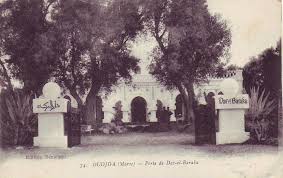
    Samedi Nov 4 1961- Dare El Baraka Oujda, Morocco
    I have decided a few times of my life to keep a diary for weeks, months, even a year. Again I am attempting it. I am reading about Marie Antoinette. Fascinating.
    School is a true horror hateful because I speak only enough French to carry on a poor conversation (hello, how are you, what is your name, etc.) M. Touati gets angry at me every day comparing me unfavorably to Carol Pixton who was apparently an angel. Just had singing class –think I grasped a few words.


    Sun. Nov 5 – 61
    Day is cold, crisp and clear – Mom and Dad and Avril went for a drive on the bled, Genevieve and Bill went for a ride on their bikes. (He is 24 and engaged. Not that it stops him making out with Genevieve every chance he gets. He can be a real pain – or a human being – sometimes.) I told him I intend to be an author someday and he both frustrated and flattered me saying I’d better “get something to write about”. I told him to climb a tree.


    Mon. Nov 6 – 61
    Back to school, very tired because I couldn’t sleep last night. Genevieve broke my doll on purpose and I hid in the garden while everyone searched for me. Asma my Algerian friend gave me a small box of licorice from the licorice seller who stands on a bloodstain right outside our gates (reputed to have murdered a little boy there.) Penny a box (5 francs).


    Turns out it is against the rules to eat in school. M. Touati said “Donne moi le boite.” (Asma said my lips were “noir”.) He asked if I was eating, I confessed, he asked Asma and she denied it (her lips were noir as well.) I wouldn’t satisfy him with a lie. I did my recitation, He said my pronunciation was terrible. (He speaks a little English. His pronunciation is terrible too.)


    Tues. Nov 7 – 61
    School sheer drudgery. I think longingly of death. I am still behind Carol. Mom says she had a French tutor all summer! That took a lift off my back. Genevieve and I bought the most delicious tarts at the Colombo Café – cherry chocolate cheesecake.


    Sun. Nov 12 – 61
    We usually take a trip on Sundays and Mom wanted to see the sea. (Mediterranean. Why, since the whole country is turning to sand?) Went to Cap de L’eau and had to ford a river –the Citroen has a special gear to raise it up. Neat. Rode on a ferryboat – Bill talked to the man in Arabic. Showing off. Cap de L’eau was not as spectacular as I’d been led to believe. It was windy and there was a dust storm. Bill offered to be a Seeing Eye dog and tried to push me off a cliff. Joking, he said.


    Mon. Nov 13 – 61
    Trudged back to school with crowds of children shouting “Romain!” at me (I think it means foreigner.) They put in the second grade hoping I’d learn something. I didn’t. Mr. Touati loaded us to our ears with homework. Took our guests to the Avril’s ballet recital (she was the only one not allowed to wear stage makeup courtesy Mom). Genevieve played flute with the Oujda Symphony. Sat way up in the balcony. It was wonderful!


    Tues Nov. 14 – 61
    School awful. I was hoping to recite my poem (learned all but one verse) but we had a science test which I did lousily on. No one did the homework.
    Dad took away my Agatha Christie and insisted I read The Forbidden Voyage about a family who sailed into the nuclear testing zone. It is interesting. One of our guests here at the Dar was aboard the Golden Rule, which was the same sort of boat.


    Fez – Thurs Nov 16 – 61
    Taken out of school in the afternoon (I had to go in the morning) so we could go to Fez! What a day! Car ride uneventful, arrived after dark. I changed from sailor hat and slacks to skirt and blouse at the hotel. I wanted to go back to the Hotel de la Paix after dinner but the family wanted to go to the Medina (in the middle of the night!) I said ‘I refuse” and stomped up the stairs. (I would rather read Wuthering Heights.) Genevieve came after me and said I’d got Mom in a frenzy. I said I didn’t care. (Did care.) Daddy came up to get me and led me sobbing down the stairs. Mom said she would stay in the hotel with me but I refused to ruin the trip for mother. They said Genevieve could stay. We smuggled tangerines and peanuts in our suitcase so we had a good night.


    Fez – Fri – Nov 17 – 61
    Coffee instead of chocolate for breakfast! Then we went to the Medina (by daylight) and saw everything including the mosque where we could hear them chant the Koran. (If you aren’t a Moslem you can’t go in.) They take off their shoes to keep the mosque clean.
    Vulgar street boys threw mud at us (Bill said they think we are French.) Went to the Palais de Fes (that’s how they spell it) and bought a few things. I got a knitted hat and a Moroccan purse. We had a good lunch (lamb) but had to wait a long time. Dad joked they had to go find a lamb. They brought us water to wash our hands at the table. I played with their cat and had to wash my hands again. But it was delicieux.


    Fez Saturday Nov 18 – 61
    Went to eighth century town Moulay Idis which was adorable and bought some pottery. Saw the outside of the Famous Tomb you can’t enter in if you are an unbeliever, also marks on the doors that mean someone has tuberculosis inside. We had to leave before dark – you can’t spend the night if you are a heretic so we went to Volubilis instead which is really beautiful a Roman ruin where I bought a lot of postcards. (I like the cranes building huge nests on the orange columns.)
    Dined again at the Nautilus – the hotel restaurant. I had steak and pommes frites, yogurt and sugar with oranges to take back to our room. Daddy gave Avril money to put into the blind beggar’s tin can.


    Fez to the Dar – Sun Nov 19 – 61
    A near perfect day. Genevieve gave me her peanuts to eat. Went to the Medina one last time – got a guide who looked like a hood. Visited the tanneries – the stench was unbelievable. I held my nose which Bill said was rude (he is colorblind and also no sense of smell. Almost as pathetic as the hotel beggar.)


    Tues. Nov 2 – 61
    School: horrid. M. Touati in a bad mood, tearing up people’s notebooks and slapping poor Belanger. Made him crouch beneath the teacher’s desk as punishment. Genevieve says they are forcing her to write with her right hand – don’t care that she’s been left-handed since birth.
    My cat Christopher has a girlfriend – the cook Embarka’s white cat. She is very pretty. He yells outside my window for extra food for her.

    Wed 22 Nov 61
    M. Touati says bring 200 Fr so we can go to the circus. If you don’t bring them you can’t go.  I am bringing 200 for Asma. M. covered my paper about the beggar man with red marks because I looked up the verbs expressifs. I thought that’s what they wanted. I asked Mom aren’t we celebrating Thanksgiving?  Apparently not.  But Merrill is coming home from school in Switzerland for Christmas. She says she’s engaged. (She gets engaged every year.) Dad says never wear a bikini in front of your intended – they are Guaranteed to Lose Control.  But the NY Times writer’s wife wore the smallest bathing suit ever seen on a human person and Dad acted thrilled to see her.
    
    Thurs Nov 23 – 61
    We had a turkey after all! Mom said I asked in front of someone who wasn’t invited so that’s why she lied. There’s no figuring her out.
    
    Past midnight 
    The Spanish circus was wonderful.  There was a fat strong lady who lifted up eight people, some of them on an iron pole on her nose.  The tightrope walker Minni was everybody’s favorite but I liked the strong lady best. Minni had a man standing beneath her the whole time as if he could catch her when she fell! I guess they were just hoping it would kill him and only cripple her but luckily she didn’t fall. (We deduced he was her papadaddy.) The juggling was impossible!  They played American rock n roll in French! (“Ne racroche pas”.)  Mom and Bill shook their heads over the Americans spoiling Arab culture. I think their culture could use some spoiling since grown men chase little girls down the street if they have the nerve to wear Bermuda shorts.
    Sun. Nov 27 – 61
    Slept late – glorious day.  Fed Christopher – he is very jealous if I give the other cats attention.  He hates to be picked up (he never seems to hate me for attempting it) but he will allow petting. That’s OK, he used to be completely wild. I love his wild free heart. 
    Mon Nov 28 – 61
    Reading the Times – fallout, war, horror and death.  Why do these things have to happen in my generation?  I don’t hate anybody. I love the world and I don’t want to destroy it. 
    
    Fri. Dec 3 - 61
    Zoubida came with a little friend who spoke only Arabic and I entertained them.  All they wanted to do was eat green figs and knock berries off the tree. I went to get a ladder.  The berries were delicious; we divided them up equally. Majahead taught them how to make spears from bamboo.
    
    Mom drove them home and they invited us in. They seemed rich to me (her father is a general) but served that mint tea so full of sugar you can stand a spoon.  You have to drink it or they are insulted. My sisters are running roughshod over me telling me to stop writing so they can turn off the light. A person can’t record their thoughts around here without being bullyragged. 
    Today we had a student teacher,  Hopefully M. Touati is dead.  My birthday’s soon and they owe me $7. Good night!
    
    Samedi 2 Dec 61
    27 wrong in dictée.  Mr. Touati shook Carol Pixton is my face again.  That girl’s a blight. Poor Maurice Belanger under the teacher’s desk again. We had a singing contest at recess, singing in our own languages. The Arabic’s the best. 
    
    Wed. Dec 6 - 61
    Maria the Swiss nurse gave me a box of decorations for my party. Dad and Paul came home from their trip – Dad’s growing a beard – yuck!  I wore my red dress with the daisies. I got a Moroccan inlaid box with a necklace (which I’m wearing) the ragged bear from Warwick Castle. A copper bell from Rheims with the cathedral on the front and bath talc also.  Good naturedly conceited Genevieve gave me two of her old bras. First time I ever wore a bra. Avril watched me put it on.  Embarka made a wondrous cake and her famous fudge balls.  I was glowing.  Ideal afternoon at school. I came home and wrote eight letters.
    At dinner Genevieve was so obnoxious I left the table without eating (all I wanted was cake.) Dad said no one should go near me I was “off the rails”.  Homework, homework, homework.
    
    Thurs Dec 7 - 61
    Today was generally miserable but maybe I’m exaggerating. Accidentally dropped Zackia’s pencil sharpener out the window. Feels funny wearing a bra! They tried to teach us Arabic in the afternoon! I’m having enough trouble with French! I think I’ll lead a revolt. M. le Directeur is sick with bowel trouble. Moroccan food is a shock. 
    
    In the evening went to a Brahms concert. It was good. Afterwards Avril and I built a tent out of blankets and sweaters. One bathroom being fixed, the other generally in use so I went outside! 
    
    Sun Dec 10 – 61
    Took Zoubida rock climbing – she doesn’t get much exercise.  The countryside is beautiful.  Saw a lamb that had just been born. 
    
  • Morocco

    In spring of 1961 my father announced that he was giving up his job building public housing in Cleveland. He would be taking a position as Director of Refugees for the American Friends Service Committee in Morocco. We were to sell our house and almost everything we owned and move to Africa. I was only ten years old and my parents had a lot of explaining to do before I could even begin to understand.  I had just been diagnosed with “myopia” and told I would need glasses for long distance vision and I was privately worrying about going blind. I recall asking Mom if we would be “poor” and she gave some needlessly confusing answer about how both she and Dad would be working for $50 a month. My sisters had started a pattern of ridiculing my fears so I could only find answers in books. Mom and Dad told us we could each take ten books on our move and gave us “carte blanche” at the College bookstore. I preferred history; somehow the disruptions in the lives of husband-seeking princesses sent to foreign courts seemed bizarrely comforting. We had to have a series of shots that sent us all to bed for a full day. I recall applying for passports while mothers’ friend swore, hand uplifted, that she had always known us and that we had no desire to sabotage or plot against the U.S.
     
    We held a yard sale where I sold all my dolls and comic books. The cats and dog were given away. My friends were very excited that I was going to northern Africa and asked a lot of questions about the Sahara and Arabian horses that made the trip sound like it might be more of an adventure than a threat. 
     
    First, we flew to England to stay in a castle used as a Quaker conference center where Mom and Dad would receive training. At that time, I was reading about the French Revolution and was particularly taken by the Affair of the Necklace. Living in a castle – it had beautiful grounds – made me part of the story and only seemed appropriate. Then we flew to Switzerland to leave elder sister Merrill at the International School. Mallory had been enrolled at the Quaker boarding school at Barnesville, Ohio and Mom and Dad took it for granted that she would stay there while we travelled; but she absolutely refused, even contacting her congressman for help in springing her from that prison! Merrill still recalls all of us driving around Geneva crammed into a taxi looking for some family to take her in. Somebody had heard of a cleaning lady who might know someone who – etc. Since we were in Switzerland anyway, we might as well take a look at Mont Blanc. Dad rented a Peugeot, which he always said afterwards he had to kick up and down the Vosges Mountains; in Morocco, he made sure we had a Citroen with a special lever allowing it to ford streams!  To get to Chamonix we had to take the Grimsel Pass, and it was grim, a sheer drop with no railing of any kind. We all sat as far as possible on one side of the car. But Chamonix was worth it.
     
    We also saw Paris. Like most people, my sisters and I were stunned and seduced by the food. French breakfasts were a dream come true – chocolate in big drinking bowls, croissants, jam in elegant little earthenware pots, and curls of moist butter. Heaven!  Picnics in the French countryside with bread, salami, cheese and iron-tasting mineral water. We saw Carcassonne, which is a living fairy tale. The streets erupted on Bastille Day – just in time for baby sister Avril’s birthday. She was thrilled to see an entire nation celebrating her birth with songs, fireworks, sparklers and parades.
     
    My first sight of Morocco was very different from the desert I expected. There were fields of brilliant red poppies in bloom, hills dotted with stubby trees (sometimes with goats in them!) I was amazed by how people would stand unmoving in the road when a car was approaching, forcing the car to go around, and how children would come right up and speechlessly just stare. Berber girls were blue-eyed and clad in multiple wild colors while Muslim women wore full hijab with only their eyes showing. Their outfits looked very uncomfortable and hot to me but Arab girls my age didn’t seem to have to wear them, although grown men still looked at us strangely and became visibly excited by our Bermuda shorts. At one point Mom – wearing a straight skirt – was “goosed” by a man walking behind her. All this had to be explained to me by apologetic parents struggling to maintain compassion toward what they saw as crippling “medieval” religious beliefs. 
     
    Our house was in Oujda, a town on the edge of the Algerian border. Because the Algerians were waging a war of independence against the French colonialists, Arab refugees were pouring across the border and had to be housed in tents and encampments. Morocco bragged that it had avoided becoming completely French because of its strong monarchy (in the fifties, King Mohammed V reputedly threw a journalist to the lions.) The current king, Moulay Hassan II, had several feisty sisters who wore jeans and refused to take the veil. My favorite, Ayesha, was a wrecker of sports cars. Then there was the great resistance fighter, Jamila, tortured by the French. We heard many legends like this from local potentate, Moulay Suleiman, who entertained us to tea while his wives peered excitedly at us through a wooden screen.  Tea was served in glass cups nestled in silver filigree holders; it was mint, bright green and at least half sugar.  It was not my thing but we were warned to be polite. Moulay Suleiman invited us to a meshoui, the celebratory cooking of an entire sheep in a pit. Even the eyeballs and lungs are eaten. (The eye is a great prize.) We were also treated to the sight of armed horsemen in ceremonial dress riding straight at us, stopping inches away and firing their rifles in the air while shouting. It was impressive, and they would do it as many times as we wanted.
     
    The Oujda house (Dar el Baraka, House of the Blessed) was enormous, a central tower ornamented with arrow slits and two big stuccoed wings in a 2-acre garden. The whole property was surrounded by a cement wall with broken glass cemented on top. The garden contained a guest house, (used only for storage), a garage (where the gardener and his wives lived) and swimming pool that a special town ordinance banned from ever being full. However, the garden had a complex set of irrigation ditches managed by the gardener Lakhdar. In the right wing lived a team of British nurses and Midwest Quaker volunteers. There was also a cook named Embarka who lived behind the kitchen with her son, Mujahed. Embarka was a fantastic chef; my favorite dishes of hers were rabbit stew with olives, and for dessert, chocolate balls – basically fudge rolled round and around in her hennaed hands. 
     
    The central tower contained an enormous two-story “salon” with two living areas, a long dining table with sixteen chairs and a fireplace the size of a mudroom. During the morning Embarka and her helper Fatima (Lakhdar’s youngest wife) would close the long interior shutters and swab the terrazzo floors with water; this kept the big room cool all day. The tower and rooftop terrace were reached by outside steps shrouded in brilliant bougainvillea; at night, the view of the stars was spectacular, and sometimes sister Genevieve and I were allowed to sleep up there.
     
    Our rooms were in the left-hand wing, all three sisters together in one room with a big fireplace and its own bathroom. The bath had a hot water tank with a pilot light that had to be lit – “Boudagaz” – often singeing our eyebrows.
     
    My sister Genevieve and I loved exploring the garden, which was always excitingly alive with bats, birds and feral cats. The guest house was full of boxes of onion-skin correspondence from previous tenants of the House of the Blessed, French colonialists bewailing their separation from the mother country. From our perch atop the wall we watched Lakhdar manage his irrigation ditches.  Poor Avril, aged only six, wanting desperately to join our club, asked how we got up there. We told her we knew how to fly but we wouldn’t be teaching her. This caused her to break into the Grand Salon while Mom entertained ladies to tea, sobbing, “Genevieve and Alysse won’t teach me to fly!”  Mom stomped out on the terrace shouting, “You teach Avril to fly this minute.”
     
    We grudgingly tied Avril up in time-consuming paperwork to “join our club”, insisting she submit a urine sample. She brought us a glass of white port instead, which we deemed acceptable. Unfortunately, at that point my thirteen-year-old sister and a 22-year-old intern from the Midwest named Bill discovered each other and became boyfriend and girlfriend conducting a steamy 50’s affair, with no pushback from our deliberately blinded parents. I developed a relationship with one of the cats, who I named Christopher, and fed with scraps from our meals. Apparently, this made the other intern, a heartless, handsome and ideologically rigid idiot resolve to poison them all.  Christopher, who had always refused to enter the house, crawled under my bed to die. I turned to Agatha Christie, who explained the heartless idiot perfectly to my eleven-year-old mind.
     
    Then it was time for school. The world outside the walls was even more problematic. At our gate stood a licorice seller. The previous Refugee Director’s little boy sent us a “Missing you” postcard to deliver to him, but the hard, stuck-together clumps of licorice failed to gratify Genevieve and me, who preferred expensive French pastry sold at The Colombo. When translated into dirhams our allowance provided a very favorable exchange rate. The licorice seller also guarded the spot of a recent murder, showing off the gruesome bloodstain to passersby.
     
    The schools spoke French. The previous director’s children had been home-schooled until their French was “perfect”, but Mom and Dad decided to throw us in at the deep end and hope for the best. Until we made friends, Jennifer and I were likely to have stones thrown at us by Arab children shouting, “Romains!”; slang for Westerners.
     
    To attend school, you needed a “cartable” (briefcase) and a “tablier” (smock) purchaseable at a weird store right out of a Humphrey Bogart jungle equipment movie. They also sold block chocolate and warm Pepsi (nobody ever had ice.) “Lunch” was two pieces of French bread (small pieces) with anything between them. A chunk of cheese or chocolate was perfectly fine. Mine was struck out of my hand on the very first day and stepped on by a boy screaming wildly with delight. “Ha ha! Now you can starve!” Luckily, I acquired a wonderful friend – Zubeida Benkhala, who said her father was an Algerian general. And he may have been, because she lived in a big house and not the refugee encampment. I went to visit her after school one day and was a hit because I could sing the English version of “Ne Racroche Pas” (“Don’t Hang Up.”) The French would not associate with Arabs and since I associated with Arabs they would not associate with me. All of us had Arab friends, Avril’s was Karima Bouzidi and Genevieve’s was Salima. Arabs were friendlier.
     
    School was terrifying. The teachers were physically abusive, the bathroom was a Turkish hole. When marched up to the blackboard, poor Avril just peed in front of everyone. We all learned enough French to get by; I began to dream in the language. My teacher, Monsieur Touati, couldn’t decide whether to make me his enemy or his pet, since I wouldn’t be his stooge. (I was not especially polite to adults.) After I left, he wrote to me, demanding pictures, when I sent one, he said it was too dark and he couldn’t see me properly. I think that was the end of our correspondence.
     
    Life was enlivened by visitors and tourism. NY Times war correspondent Tom Brady was posted locally with his entire family; they invited us out to “watch the bombing” for entertainment after dinner. I found staring at explosions over darkened hills a dull experience but my father was impressed by Brady and considered him a celebrity.

    Another visitor was Quaker historian Paul Johnson and his wife, who introduced us to a monastery full of interesting and highly educated European monks. We visited the holy city of Moulay Idris where infidels (such as us) cannot remain after dark. We travelled to Meknes, Fez and Casablanca and visited all the souks where we learned to bargain for leather goods (all you had to do was threaten to leave.) We visited a leather-dyeing facility – glorious pools of deep color but the stench was so terrible we held handkerchiefs over our noses.

    Most interesting was Melilla, a coastal city still belonging to Spain where we had to go through customs both in and out. Moroccan customs actually took down our tire identification numbers to make sure we wouldn’t buy new tires and fail to declare them! We travelled to Volubilis, gorgeous Roman ruins with huge storks’ nests atop the columns, saw the Sahara Desert and the Atlas Mountains with its snow and ski lodges, penetrated deep into the earth at the Grotte de Chameau (where I had a panic attack.)
     
    Back home Genevieve played flute with the Oujda Philharmonic Orchestra and Avril took ballet; I read the Complete Molesworth and started a newspaper for the “inmates” of the Dar. Mom and Dad and the Quaker team taught sewing, carpentry and electrical wiring to the refugees and wanted to have a graduation celebration with food, games and awards.  Jennifer and I gave a popular puppet show and the women danced. The next day we heard all the women had been beaten up by their husbands for dancing in front of foreign men. I began sleepwalking. It was spring and I was ready to leave Morocco. The French and Algerian war ended with an Algerian win. Ben Bella rode triumphantly through the streets while the women yu-yued from behind their hijabs. Mom and Dad and Avril prepared to move to Algeria. Genevieve would be sent to Plumly school, and I would be sent to live with my aunt, uncle and four boy cousins in Wayland, Massachusetts.