Tag: Memoir

  • How I Became a Dancer

    HOW I BECAME A DANCER

    In the spring of 1975 I quit my job as an administrative assistant to a group of Baltimore architects and gave myself an extended vacation in Maine. I was divorced and very frustrated with the dating scene in Baltimore which seemed oriented around married older career men and young, hopeful, not very smart women. My best friend who had hired me for the position was having an extended relationship with our married boss, which I saw as revolting. She got very excited about the “black pearls” he gave her and the vacations they took where he could show off her gorgeous youthful body and his hideous elderly one at sun-drenched locations.

    I myself had an unhappy relationship with the unmarried art director (we actually lived together for awhile) which was obviously going nowhere and I was drinking too much. He got fired (not sure why) and his subsequent meltdown gave me a good excuse to get out of there.

    My parents had just bought a house on Round the Mountain Road, Vinalhaven Island, that they hoped would allow them to live on the island year-round, our property on the shore being more of a “camp”. This house had water access, a boathouse, and a fantastic greenhouse off the dining room filled with spectacular camellias. Just after my parents bought it my father was surprised to be offered a job by Pennsylvania’s governor Milton Shapp to manage the finances of his presidential campaign. My parents rushed down to Washington where the action was and rented an amazing two bedroom, two bathroom apartment on the sixteenth floor of Veazey Towers overlooking Rock Creek Park.

    Dad offered to pay me to winter in the Round the Mountain Road house and keep the camellias alive (which I successfully did, in spite of having no gardening aptitude whatsoever.) I set up my office in the greenhouse and wrote my first novel, Devlyn, surrounded by all the Victorian novels I had ever admired. I wanted to cash in on the trend and write a “gothic” novel, but the fun for me was, could I write a real Victorian novel? It was a treat to try. I had a great idea in the fact that one of my favorite authors Thomas Love Peacock, friend of Shelley and author of Nightmare Abbey, had actually adopted an impoverished village girl and treated her like a daughter. The question was, why? And what happened next?

    I spent the winter writing it out and getting an agent. I had an abortive relationship with an unmarried local realtor who turned out to have extremely primitive relationship ideas (ugh) and I was offered a serious relationship by the handsomest man on the island, a real sweetie of a fisherman. But to stay, permanently on Vinalhaven Island! To be a fisherman’s wife! Couldn’t imagine it. Turned him down gracefully (we hadn’t even dated) and he went on to marry the prettiest and worst-behaved girl on the island who led him a nightmare dance of several years until their subsequent divorce and he’s now happily married to a career-woman divorcee (with children) who can’t believe her good fortune. This hothouse trap is what islands are like and I knew to stay away. One of my previous colleague architects (whom I really knew only in passing) drove all the way up from Baltimore and suffered an hour ferry ride to the island to visit me with romance on his mind. But he was married! So by spring I was more than ready to trade houses with Mom and Dad and move down to their apartment in Washington, D.C. and see if I could scare up an interesting job. (They had to leave when Milt Shapp’s finances went under investigation by the FBI.) My sister Avril left Wilmington College in Ohio for the summer and joined me.

    I certainly knew what I didn’t want. I didn’t want to be office handmaid to a group of professional men offering low salaries and zero vacation. I considered working for an environmental group, selling art on commission in a gallery, and I tried out an employment agency whose offered jobs were never what they said they were. When I found a classified ad
for go-go dancers I was intrigued. After all, I did have a background in dance, having studied at Martha Graham in NYC and the Philadelphia Academy of Dance and I loved dancing at clubs. Avril and I went to the agency to “audition” and met Deedee, its proprietor. The job was wearing bikinis and go-go boots and dancing for the troops at military installations around Washington. There were a lot of venues! Two “gigs” were possible a day – afternoon and evening – and they would be only an hour to two hours, shared with another dancer. Bet of all, you only worked when you wanted to! Avril couldn’t stomach the idea, (she took a job dispatching messengers) but I was willing to try it.

    It certainly was an interesting experience! I drove everywhere, to bases, Navy Yards, officers’ clubs, hospitals and air stations. The men were extremely polite and sometimes tipped. I learned to navigate the Washington DC area, and even briefly dated a naval lieutenant I met at an officer’s club in Virginia. My free-wheeling Quaker/artistic/peacenik background clashed horribly with his career plans, however.

    Most interesting were the other dancers. All of them were career dancers who combined occasional gigs for Deedee’s agency with dancing in local clubs. I soon discovered the clubs in Virginia were considered the best because the Alcohol, Tobacco and Firearms vigilantes enforced audience distance from the dancers, who stayed in the dressing room when not on stage. Stockings, pasties and g-string were the required outfit, and the money was better than anything Deedee could pay. Three dancers worked per hour, so a set was twenty minutes. Less driving, more money, and a physical workout. It sounded good to me! My sister and I rented a three bedroom house in Chevy Chase, I auditioned for the Ad Lib in Alexandria, Virginia and was hired by Gentleman Jim, the manager. That’s how I got started dancing.

  • How I Became a Dancer

    HOW I BECAME A DANCER

    In the spring of 1975 I quit my job as an administrative assistant to a group of Baltimore architects and gave myself an extended vacation in Maine. I was divorced and very frustrated with the dating scene in Baltimore which seemed oriented around married older career men and young, hopeful, not very smart women. My best friend who had hired me for the position was having an extended relationship with our married boss, which I saw as revolting. She got very excited about the “black pearls” he gave her and the vacations they took where he could show off her gorgeous youthful body and his hideous elderly one at sun-drenched locations.

    I myself had an unhappy relationship with the unmarried art director (we actually lived together for awhile) which was obviously going nowhere and I was drinking too much. He got fired (not sure why) and his subsequent meltdown gave me a good excuse to get out of there.

    My parents had just bought a house on Round the Mountain Road, Vinalhaven Island, that they hoped would allow them to live on the island year-round, our property on the shore being more of a “camp”. This house had water access, a boathouse, and a fantastic greenhouse off the dining room filled with spectacular camellias. Just after my parents bought it my father was surprised to be offered a job by Pennsylvania’s governor Milton Shapp to manage the finances of his presidential campaign. My parents rushed down to Washington where the action was and rented an amazing two bedroom, two bathroom apartment on the sixteenth floor of Veazey Towers overlooking Rock Creek Park.

    Dad offered to pay me to winter in the Round the Mountain Road house and keep the camellias alive (which I successfully did, in spite of having no gardening aptitude whatsoever.) I set up my office in the greenhouse and wrote my first novel, Devlyn, surrounded by all the Victorian novels I had ever admired. I wanted to cash in on the trend and write a “gothic” novel, but the fun for me was, could I write a real Victorian novel? It was a treat to try. I had a great idea in the fact that one of my favorite authors Thomas Love Peacock, friend of Shelley and author of Nightmare Abbey, had actually adopted an impoverished village girl and treated her like a daughter. The question was, why? And what happened next?

    I spent the winter writing it out and getting an agent. I had an abortive relationship with an unmarried local realtor who turned out to have extremely primitive relationship ideas (ugh) and I was offered a serious relationship by the handsomest man on the island, a real sweetie of a fisherman. But to stay, permanently on Vinalhaven Island! To be a fisherman’s wife! Couldn’t imagine it. Turned him down gracefully (we hadn’t even dated) and he went on to marry the prettiest and worst-behaved girl on the island who led him a nightmare dance of several years until their subsequent divorce and he’s now happily married to a career-woman divorcee (with children) who can’t believe her good fortune. This hothouse trap is what islands are like and I knew to stay away. One of my previous colleague architects (whom I really knew only in passing) drove all the way up from Baltimore and suffered an hour ferry ride to the island to visit me with romance on his mind. But he was married! So by spring I was more than ready to trade houses with Mom and Dad and move down to their apartment in Washington, D.C. and see if I could scare up an interesting job. (They had to leave when Milt Shapp’s finances went under investigation by the FBI.) My sister Avril left Wilmington College in Ohio for the summer and joined me.

    I certainly knew what I didn’t want. I didn’t want to be office handmaid to a group of professional men offering low salaries and zero vacation. I considered working for an environmental group, selling art on commission in a gallery, and I tried out an employment agency whose offered jobs were never what they said they were. When I found a classified ad
for go-go dancers I was intrigued. After all, I did have a background in dance, having studied at Martha Graham in NYC and the Philadelphia Academy of Dance and I loved dancing at clubs. Avril and I went to the agency to “audition” and met Deedee, its proprietor. The job was wearing bikinis and go-go boots and dancing for the troops at military installations around Washington. There were a lot of venues! Two “gigs” were possible a day – afternoon and evening – and they would be only an hour to two hours, shared with another dancer. Bet of all, you only worked when you wanted to! Avril couldn’t stomach the idea, (she took a job dispatching messengers) but I was willing to try it.

    It certainly was an interesting experience! I drove everywhere, to bases, Navy Yards, officers’ clubs, hospitals and air stations. The men were extremely polite and sometimes tipped. I learned to navigate the Washington DC area, and even briefly dated a naval lieutenant I met at an officer’s club in Virginia. My free-wheeling Quaker/artistic/peacenik background clashed horribly with his career plans, however.

    Most interesting were the other dancers. All of them were career dancers who combined occasional gigs for Deedee’s agency with dancing in local clubs. I soon discovered the clubs in Virginia were considered the best because the Alcohol, Tobacco and Firearms vigilantes enforced audience distance from the dancers, who stayed in the dressing room when not on stage. Stockings, pasties and g-string were the required outfit, and the money was better than anything Deedee could pay. Three dancers worked per hour, so a set was twenty minutes. Less driving, more money, and a physical workout. It sounded good to me! My sister and I rented a three bedroom house in Chevy Chase, I auditioned for the Ad Lib in Alexandria, Virginia and was hired by Gentleman Jim, the manager. That’s how I got started dancing.

  • Learning to Write

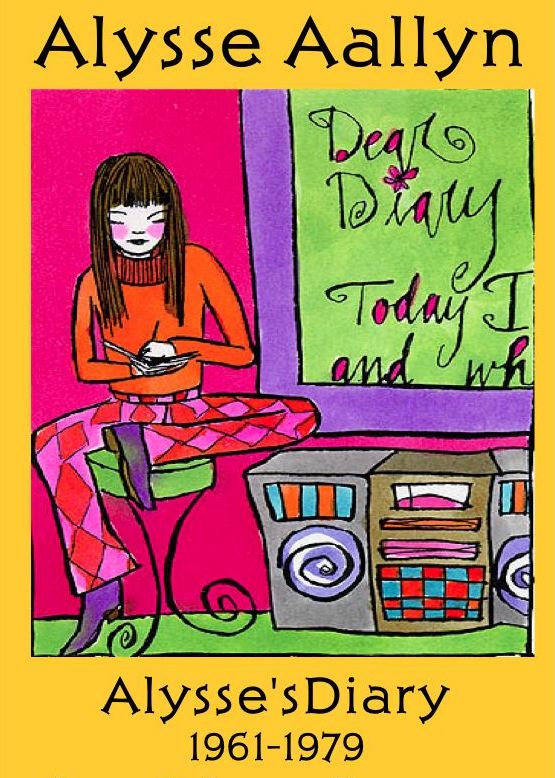
    I always wanted to be a writer but writing felt almost too intimate ever to be my career. Other people didn’t seem to like it when I told the truth and always tried pushing me in a different direction. I kept a diary from the time I was nine years old and journaling became necessary to iron out my thoughts, develop them and see who I was becoming. From an early age my stories and poems didn’t meet much family support. If it wasn’t humorous, my parents weren’t interested. My father acted offended. “You wouldn’t want me to say it’s good when it isn’t, right?” My mother laughed her way through my short story about child sexual abuse: (To Bed in the Afternoon) “Isn’t it a joke?” School was more helpful because English teachers typically recognized and encouraged my gift. Fellow students, not so much. The areas I wanted to explore – personality contradictions, alienation, disappointment – were deemed pointlessly anarchistic. I read a lot and particularly liked mysteries involving masterful re-interpretations of confusing and frightening events. I remember excitedly opening Paul Goodman’s Growing Up Absurd recommended by a teacher but dropping it as soon as Goodman declared girls were not subject to any of the pressures he described. Idiot!

    I was particularly frustrated at Plumly, my Quaker boarding school, which was reputed to be educationally advanced.  Their slow crawl through the likes of Steinbeck, London and Melville threw me into full rebellion. I did not encounter a single memorable writer in the English syllabus there and lobbied unsuccessfully for the inclusion of at least some women writers (my paper on Francoise Sagan was frigidly received.) When I complained to my parents, they joked that maybe I’d be happier at Catholic military school. It seemed I was going to have to construct my own education. The nineteenth century proved a good place to start – blazing with impressive women writers – ultimately bearing fruit in my first novel, Devlyn.

    My experience at Plumly was so bad I couldn’t imagine going straight to college but took a “gap year” flirting with acting and dance. Fame would be nice, but what I secretly hoped for was fulfilling and supportive romantic love. I was able to talk my parents into paying for an apt on West 56th Street in New York City where I enrolled at Circle in the Square Theatre School and the Martha Graham School of Dance. Even though I got the lead in the acting class play I thought I was horrible and I was never happy expressing other people’s ideas that I couldn’t agree with right when I was trying to figure out my own ideas. The most profound memory I have of that period was feeling people trying to control me and me not wanting to be controlled. But could freedom be found? My own background strongly suggested marriage was a place where I could flourish – once I found someone who loved me and believed in me couldn’t I let my husband worry about the money? That seemed to be something men naturally wanted to do, while my knowledge of Mom’s Chestnut Hill friends was of women living in artistic paradises created by their own hands. Sure looked good to me!

    My first boyfriend after Plumly’s Toss was an actor named Armon Hyle. He was talented theatrically and deeply sensitive and artistic. I followed him to Lawrence University but persuaded him to transfer to Antioch in Maryland where I could study writing – and there I ran into my first husband, the multi-talented Bruce Burke.

    Bruce was a musician and a writer and dripped with charm. In fact, my writing teacher far preferred his writing to mine although I was fairly certain she was really ensnared by his beauty, as most people were. I considered Bruce’s poetry “masculinist” (i.e. idiotic) and I stalwartly refused to be critiqued by him, or even by my writing teacher who kept trying to make me “write like The New Yorker.” (Later she hired me to ghostwrite a novel for her. It was called The Colors of Love if I remember right and we did ell it but I thought it was pretty ghastly dreck.) I was struggling to write a novel about adolescence that tried to expose the general craziness of non-conforming parents who want you to conform, but I kept tripping over the Problem of Sexuality and was getting nowhere. I also wrote awful (feminist) poetry attempting to skewer my fluctuating psychological and emotional states. My job at the time was as the only paid employee of a community theatre whose director was a predatory sexual harasser. My relationship with Bruce kept him in check. Bruce had a band, Bad Heart, which played all over Maryland and DC on the same bill with better known musicians like Emmylou Harris and Judy Collins. It was fun travelling to David’s concerts, getting to know musicians, roadies, groupies and especially his charming manager, Bubbles (who used to tell me, “Alysse, you need to get your gothic ass in gear.”)

    Bruce was older; he’d been married and divorced, been to Vietnam, been to jail. When he asked me to marry him I was elated. Marriage was in particularly bad repute at the time, but I thought my parents might accept him, which they grudgingly did. Our fun wedding at the Quaker Meeting on Jan 1, 1972 was everything I wanted, except that the harmonium player couldn’t make it through the snowstorm, and afterwards we drove to Vermont to stay with one of his roadies at a ski chalet. Right away, Bruce and I clashed. What I thought would be a ski weekend was actually a drug weekend and I refused to participate. Bruce was irked. According to him, you HAVE to do what everybody wants to do. But I had spent my entire life resisting that!

    So after the wedding I discovered that my husband was a man who simply said anything other people wanted to hear. I was completely unprepared for somebody like that; I had been taken in, like everyone else. He talked my father into investing in his band, he talked a friend into investing in his album, he never did any of the things he said he was going to do with the money, always leaving me to apologize (and grovel), picking up the pieces.

    He wanted to be where the action was, but I wanted to live in the country where I could write my novel. Almost immediately after our marriage his mother died, and using their tiny inheritance, he and his brother bought a farm in Devil’s Elbow, New York where real estate was incredibly cheap. The peace and quiet was just what I had been looking for. I immediately plunged into a novel about a lesbian relationship (Flycatcher.) It was really about the relationship of a mother to an unacceptable daughter, and the mother’s search for a perfect daughter but it was painfully inchoate. In the meantime, Bruce was touring, taking drugs and being unfaithful because “that’s what everyone expects.”

    Our marriage, his relationship with his brother and with his investors were all on the rocks, so we sold the farm and moved back to Maryland to complete our college degrees. I needed a job and I needed to get rid of Bruce – I told him he could have the rest of the house money if he would just split, which he happily did. He had some bridges in England he needed to burn.

    It wasn’t till my parents offered a housesit in Maine that I was able to actually complete and sell a novel, but although it sold 100,000 copies (paperback) it didn’t provide the kind of money you could actually live on. Worse, the publishing connections I had made assumed I would write to specification, while I had a whole psyche left to explore! Once again, marriage (much happier this time) and children (who turned out to contain the secret of the meaning of life!) intervened.

    I wasn’t able to work on my second novel until 2002. I had been studying true crime for the past decade, increasingly intrigued and absorbed: here were ready made, real plots that explicated the very questions of identity, self-presentation, power, truth will and justice that had always obsessed me. With Find Courtney, I was off and running – and to my intense artistic satisfaction, Woman Into Wolf, Depraved Heart and I’ll Sleep When You’re Dead quickly followed with fabulous reviews. Unimpressive sales led me back to the theatre, where one forges a more immediate connection with the audience. With every play, The Honey & The Pang (Emily Dickinson), Queen of Swords (murderous stepmother), Cuck’d (Othello), Caving (quantum physics), Rough Sleep (the multiverse), The Dalingridge Horror (Virginia Woolf) I find out more and more about myself and the world I’m living in. Writing full-time to please yourself is the greatest joy there is.

  • Mom

    CULTURE AND MY MOTHER

    Most people considered my mother not just the nicest, the most beautiful, but the most cultivated person they had ever met. She said “tomahtoes”, giving many words their English pronunciation; she floated through my childhood in a haze of elegant gardening, French cuisine (she made her own mayonnaise) and general gorgeousness. She had the famous “Marilyn Monroe” dress, sheer white with pleats and v-shaped neckline that she wore to parties with her arty hammered silver hand-and-feet earrings and necklace. She was tall, narrow-hipped and full-breasted, used no makeup except lipstick and she looked like a movie star in old slacks and a Mexican shirt. Grown-up people gazed at her adoringly, and as a child, it was hard to get her attention. It was, however, fairly easy to make her cry. We four sisters played a game my father called “ripflesh” which was basically torture. It was “Lord of the Flies” with girls.

    The sport of Ripflesh was forbidden, making “the Queen” cry was forbidden, and Dad informed us that any promises we extracted from the Queen outside his presence need not be honored.

    Mom was an “early education” specialist, so we had a playroom, a costume trunk, a full collection of puppets and all the Newberry Award-winning children’s books. I wrote my own children’s book based on Harold and the Purple Crayon; Poor Left-Out Harry – which much impressed my parents. They sent it around to their friends and we never got it back. Mom and Dad went to local art galleries and hauled home big modern art paintings by local artists. She enrolled us in modern dance classes taught by Dad’s business partner’s second wife, who wore a pencil through her ponytail and looked like a Feiffer drawing. Our Christmas tree was decorated with Mexican pierced tin ornaments and the modern house with the huge picture windows built to Mom’s specifications had heated polished cement floors.

    She was dismissive of the exciting and sentimental TV, vulgar movies and comics we enjoyed but she did promote Classic Comics, which were my first introduction to Dickens and Robert Louis Stevenson. I went on to read and enjoy the books. Visits to museums gave me a fondness for Egyptian art which she fed. She bought me all the Narnia books which I read one after the other.

    Mom used to lock us out of the house so she could have “Quiet Time”. She would tell us to go play in the local arboretum, a haunt of pedophiles and up-to-no-good teenage boys. Luckily we were usually in a group. I was attacked and de-pantsed only once, but managed to get away. When I needed to be alone I climbed a tree. When she wanted us home Mom would yodel fearlessly out the back door. You could hear her for blocks.

    On trips to Europe my mother clutched the Michelin guide and insisted we see the sights. They were usually well worth seeing. My mother and I bonded over medieval, Byzantine and Mannerist art which nobody else in our family liked but which woke me up to a lot of religious and artistic possibilities. We both had a taste for strongly stylized representation. I began to see the echoes of ancient art in modern art; and to be excited by the progression of ideas, experiments and languages. I wrote my own ancient Greek play (Chrysothemis).

    As I became a teenager our tastes diverged. My mother loved beautiful clothes and often had hers tailored and hand-made at considerable expense. She visited China in the days of Mao’s mandated blue uniform and everyone gasped at and wanted to touch her bright pink raincoat. I have a pink raincoat now, in her memory. She ruled out polka dots (I love polka dots) and considered pink and black colors should never be in the same room. (I love pink with black.) She almost never liked my teenage fast fashion, but right before graduation she took me to the local ritzy dress shop Jane Chalfant’s, and bought me a white Walter Lanz graduation dress (they had to be white) and two op-art sundresses with matching bikinis for Senior Parties. She dismissed the outrageous cost, confiding to me, “It’s nice to be rich,” something my father would never publicly admit.

    When I became a dancer she was particularly appalled, and not in the least mollified by my “Colette Was A Nudie Dancer” bumper sticker (she didn’t like Colette, either.)

    We shopped for my wedding dress together on the Philadelphia Main Line but we were both disgusted by the mishmash of sentiment and glitz at bridal shops. (I said it was like buying a casket to inter yourself in.) We found a shop in Bryn Mawr we both liked that sold copies of antique wedding dresses – Ann Pakadrooni’s. I bought a gorgeous puffy-sleeved Edwardian dress of silk moiré with inset lace medallions. We also found her mother-of-the-bride dress, cobalt velvet with a gold brocade top, and a Victorian brown velvet riding habit for my maid of honor sister.

    After my marriage, she often gave me money for clothes and was incredulous that I usually spent at least half of it on books. She shopped at Bonwit Teller while I went to Kmart. (My youngest sister still has to be reminded to look at price tags.) Didn’t I CARE how I looked? (Not enough, that’s for sure. And I needed a steady supply of expensive books.)

    For my second wedding she clearly thought things ought to be toned down – when she showed me the suit she was planning to wear I told her she would look like she was “going to the airport” and she laughed and laughed. She wore a chiffon summer dress instead.

    She did not like my adult writing and often acted like I was doing it to torture her – still playing “ripflesh”- although occasionally she admired a poem.

    She would have been a committed grandmother but cancer intervened. My sisters took her on a tour of the famous Sissinghurst Castle garden I couldn’t attend. She sent me a postcard of V. Sackville-West’s study that I keep in my study.

    She created many gorgeous homes (remodeling every kitchen); finally dying in a beautiful condo on the harbor in Rockport Maine filled with art books, silver, china, sculpture and paintings.

    She often scared me by warning me that I would certainly have the kind of upsetting daughter I had been; but the curse never came true. Instead, I had the daughter she wanted me to be; the perfect balance of beauty, mothering, intellect, professionalism, charm, religion, art, taste, culture and warmth, with a happy marriage thrown into the bargain.

    I think of her every day, and I still say “tomahtoes.”