My books have sold over 100,000 copies so YES except – I’ve made very little money BUT… Devlyn has a brisk re-sale so readers must like it BUT… Even though Find Courtney got excellent reviews hardly anyone read it BUT… Come to think of it, I’ve only ever had good reviews. (Many raves.) Only one bad one I know of. BUT… The people who are closest to me seem untouched & unimpressed BUT Several strangers appreciated exactly what I was doing and called me their “favorite author” BUT Wasn’t able to get an agent because I didn’t have a big enough “following” or “platform” BUT transitioned easily to plays, wrote 8 with much pleasure, won three prizes, had a small New York opening BUT… I had a horrible director who didn’t understand the play BUT… I thoroughly enjoyed working with and learning from the actors BUT… Felt silenced & stymied by the pandemic BUT… Have been working on transcribing my diaries, (Inspired Pleasure) am NOT intimidated by getting old – so –
Am I a success?
It really depends on your definition of success. My definition of success is to:
1) Never stop writing 2) Draw joy from writing 3) Achieve “flow” while writing (i.e. a blissful state) 4) Feel I am advancing in my spiritual path 5) Using art to connect with others.
At first Benny and Lisa thought their daughter Jane had named her doll Violet. She was always talking about Violet. It was Violet, Violet, Violet. For example she would say something like, “Last night I had the most wonderful dream about Granny and Violet.”
“That’s marvelous, Jane.” Trying not to roll the eyes, because Lisa tried to be an encouraging mother. Her model was the late ex-First Lady Mrs. Onassis, who, whatever else you might say about her, had obviously been an exemplary parent because she gave birth to two children who adored her. Jane was a handful. She was a constitutionally slow riser and it was a hell of a project to get her to the sitter by eight.
“Granny was holding Violet in her arms. She kissed her and kissed her.” “Granny was always a very loving person,” said Lisa. “Into your shoes now, come on. You can do it. Left, right.”
Nothing odd about a dream that included both Granny and the doll. After all, it had been her last gift to Jane before the cancer took her. The doll was a “cabbage patch” knockoff – a “preemie”, just as Jane herself had been. She even had little glasses just like Jane’s. On the other hand, her hair was still blond, while Jane’s by this time was decidedly ash, soon to be the rather depressing brown Lisa’s would be if she didn’t take care to color it.
But Jane’s statements about Violet continued on an arc of increasing peculiarity until they were something even a busy parent can’t ignore.
“Violet says she forgives you,” Jane told her mother over lunch. This said in public over salad and juice at The Yogurt Break.
Lisa gasped out loud – anyone listening might think she had really done something really awful, so she tried to make fun of it, saying, “What did I do – leave her face down on the sofa again?” Jane gave her mother a strange look. Such an unlikely expression on a four-year-old face. Lisa felt sure the late Mrs. Jacqueline Kennedy Onassis had to contend with nothing similar from her children. For one thing, it was way too mature – just as if some other spirit looked out of her – a sort of polite cynicism flickering with amused contempt. Lisa was awarded that look as she struggled to recall the names of the children in Jane’s playgroup. Wasn’t Brendan the one who always pushed and Mystique the one who always cried?
“You haven’t left her anywhere,” Jane said. “You can’t touch her. She doesn’t like being touched.” Creepy. She must be talking, obviously, about something different from a doll that spent all its time suspended from its owner like a baby koala. But Lisa refused to think about it. She was not one to indulge in “mind games” as she called them. The employees she supervised were always eager to waste time in long conversations in which motives and memories were examined from every angle and then stood on their head. It wasn’t the same as getting the work done.
“Well,” she said, astutely changing the subject, “We’re here to buy a party dress! Let’s go!” Ben’s brother was finally getting married after many false starts, and Jane, as the only niece, had the exciting role of flower girl. Lisa, by pleading how difficult her daughter was to fit, had managed to acquire the dress purchasing job with the following proviso: long, lace, off- white. A pleasant afternoon of fashion choice meant that it wasn’t till dinner that Lisa finally found out who Violet actually was. Lisa and Ben were on their second glass of Chablis, enjoyably discussing future plans while the somewhat over-steamed shrimp curled in its dish, when Jane said, “Violet doesn’t look anything like Daddy.”
This silenced Ben, whose face showed confusion, so Lisa said, “Don’t talk with your mouth full. It’s revolting.”“I guess I’m flattered that I don’t look like a cabbage patch doll, “ said Ben finally. But he had lost his train of thought. Just when he was agreeing that a Disney cruise for Christmas would be so nice.
“Violet is NOT a doll,” said Jane, loudly as if communicating with deaf people, “Violet is MY FRIEND.
Ben’s forehead creased. “Is she the one who’s always crying?” “Violet is my PRIVATE friend. “
“I fail to see why your friends should look like Daddy.” Lisa served everyone more salad just to keep busy, even though they hadn’t yet cleaned their plates.
“Violet’s my sister,” explained Jane. “She has red hair just like you, but her eyes are green.” Lisa rose abruptly from the table and turned away. She began dishing out dessert too forcefully. The flan would collapse if forced to just sit here, but the hell with appearances. Jane had no sister. No brother. She was an only child. Lisa had had an abortion at fifteen, which was something she never thought about, and she had gotten the idea at the time – either from something someone told her or just out of her head – that the child had been a girl. That was why when Jane was a girl she had been so relieved. If Jane had been a boy she would have felt the need to go on questing for that lost little girl. But now her family was complete, because now everything was all right again. This was not something Jane — or anybody — had any reason to know.
Lisa’s hair had never been red, that was just the most flattering shade agreed on by customer and colorist. On the other hand that boy – Lord she could not even recall his name, she must be blocking it – had fiery red hair. And very freckled skin. Even though they were still in the middle of dinner she began unloading the dishwasher, because physical activity always made her feel better.
“Sounds like Violet is one of those imaginary friends,” she said, amazing herself with the calmness and placidity of her own voice. “Lots of children have them. It shows…” she couldn’t think of anything. Her brain was parched. A desert. “Imagination.” “I had one,” said Ben.
Amazing! The things you find out about a person you’ve been married to for fifteen years! At first she was beyond grateful to him just for participating; then she wondered if he was lying to make everyone feel normal. That would be a very Ben thing to do. But it helped Lisa for one to feel calm enough to sit back down and give the others a big smile. Inside she was thinking, “God I’m a lousy mother. I probably talk in my sleep. And Jane can see totally through me and knows just how to push my buttons at only four years old.”
Unfortunately Ben felt a need to build on his success. Since there were only three of them at a table with four chairs, he joked, “Why don’t you set a place for Violet? I always did with mine. It used to drive my mother crazy!” He laughed. “I hope she likes shrimp.” “She isn’t allowed to have shellfish,” said Jane. “She’s allergic. She’s allergic to a lot of things.”
Poor Lisa’s face collapsed like the flan. She thought she was going to burst into tears. Calloway — that was the boy’s goddam name, Crispin Calloway III. How could she ever have forgotten it? He came from a very snooty family. And he was allergic to everything. His parents were allergic to becoming grandparents, that was for sure. But at fifteen years old, what choice does anybody have?
When husband and wife were finally alone upstairs, Ben sat on the bed watching Lisa do sit-ups. She had a theory that if you exercised right after a meal the fat wouldn’t “take”. It was uncomfortable and unpleasant, but that was true of virtually everything worthwhile in life.
Ben cleared his throat loudly. He must know from experience that she wouldn’t stop just to talk to him, but he went right ahead anyway, asking,
“What happened to you at dinner? I have never seen you so thrown.” She did stop. She stopped in mid sit-up, her gut aching, and leaned against the bed, thinking, I am never going to do another sit-up again. What is the point? What is the point of anything?
How could she tell him after all these years? It was an ugly, stupid story she had done her best to forget – had forgotten until this bizarre concatenation of circumstances had somehow brought it back into the present, a situation as unlikely and yet possibly as inevitable as a group of chimps typing in a room until they produced a scene from Shakespeare. What was the point of bringing it up now? Eons of time had passed, everyone and everything was different. Yet Ben was so sweet, so sympathetic, looking at her so lovingly. He would never hold it against her. Yet if she told him, it would be like giving birth to the thing she and her mother had stopped. It would be out there in the world.
Lisa, who never cried, who hadn’t cried even when her beloved father died, amazed herself and Ben by bursting into tears. Ben slid to the ground to hold her tightly against his suit, and she choked out, “I’m such a CRAPPY MOTHER!” Because that’s what she was always feeling. Jane knew she was faking it. That’s why she was torturing her. That was the accusation in Jane’s eyes. Ben was still talking, on and on, while he rocked her. He said things like, “How can you say that? You’re the best mother I know. You’re with Jane a lot more than I am…and she’s a smart kid…she’s like a little crystal radio set…she tunes into your anxieties, all of them, even the ones that aren’t about her and she picks at them like scabs. She doesn’t know what she’s doing. Imaginary friends are perfectly OK. She’s learning to “self-soothe”. That’s what we want, isn’t it? To set her free from us emotionally. It’s probably harder on us than it is on her. We can’t just invent people to make ourselves feel better.
“I think the best thing to do is to ignore it. That’s what my parents did. There will come a time when Jane and her “sister” part company. Trust me. All little kids long for a brother or a sister….till they have them. You know what the books say about single children. They’re more verbal, they have more resources, they’re happier and more successful when they grow up…”
Thank God for Ben! He was so wonderful! What slam-dunk it was the day she married him! He never really knew what the issues were but he dove in bravely anyway, smoothing the roiled waters with his charm. Or trying.
She gasped, “You don’t think… we have to find a child psychologist… bend the insurance…”
He said, “No. I’m sure of it. Jane is fine and so are we.” And she felt so much better. Much, much better.
The morning they went to the airport to catch the plane to Ben’s brother’s wedding was one of those family nightmares that becomes the stuff of legend. It was a perfect storm of unreeling disaster. First there was oversleeping; everybody overslept. The there was quarrelsomeness; everybody was quarrelsome.
Ben ate the last of the raisin bran in the middle of the night – the last of it – knowing full well it was the only thing Lisa could tolerate for breakfast. She tried to eat oatmeal with the others but it was just the most disgusting stuff. Ben forgot the tickets and they had to go back, because they weren’t e tickets, which they should have been. Jane kept asking if she could wear the gloves that came with the dress and it made Lisa’s head ache to even think of trying to clear this past a bridezilla obsessed with trying to match the flower girl exactly to the ring- bearer. It was always dangerous to lie to Jane but “we’ll see when we get there” wasn’t cutting it.
Jane, although strictly forbidden to do so, had been trying the dress on and parading around in it so much she had managed to tear one of the ruffles at the bottom. Already. Lisa would have to mend it on the flight if it wasn’t bumpy – she was scared enough of flying as it was – or maybe in the hotel room later while the rest of the world partied. Ben was warned against bringing his coffee into the car, did so anyway, and then spilled it on himself. He was so angry he threw the mug out the window, right in front of an inquisitive four year old who had been told to grow out of tantrums.
Thank God the plane was late. It gave them a moment to regroup, to calm down, to walk more slowly, to speak to each other without biting and snapping. But when it was finally time to proceed to the tarmac, Jane began suddenly convulsing, her body jackknifing like an epileptic’s, bringing the flight attendants running – in short, it was awful.
“We can’t go!” shrieked Jane. “We can’t go without Violet and Violet’s not coming! She just stands there waving goodbye!”
They had not seen anything like this since the terrible two’s.
“Stop it!” said Ben sternly. “We are getting on that plane. Violet will join us later. You’ll see.” “If not, good riddance,” said Lisa. “Everyone has to grow up sometime.”
The tiny blue-eyed flight attendant twisted her face up with concern. She was thinking what an awful mother Lisa was, Lisa could just tell. Everyone must be thinking it.
“The airline sponsors a Fear of Flying group,” she said. “But with a child this young maybe a doctor can prescribe something.“
See? They were all telling her she’d ruined her kid and it was time for medical intervention.
“She’s getting ON THE PLANE,” said Lisa, trying to pick up a forty-eight pound thrashing weight, but it was like battling a beached marlin in full public view.
“I’m sorry,” said the flight attendant firmly, “She can’t get on while she’s shrieking like that. It would disturb the other passengers. If you have medication—“
Ben had Prozac if Lisa could just remember which bag it was in. She was demoralized enough to say to the flight attendant, “Any idea what dose…?”
The woman pulled back as if they were all crazy.
“But under the circumstances, you’ll have to take a later flight. I’m sure she’ll have calmed down by then.”
Lisa wanted to burst into tears herself. Jacqueline Onassis’ children never did anything like this. They did cute things on the tarmac, like saluting and shaking hands. Ben, who had been standing there helplessly, finally spoke up.
“I’ve got to go!” he cried, the vein in his forehead pumping like a water-hose. “I’m the best man! They’re relying on me!”
“There’s two more planes today,” the flight attendant soothed.
Jane broke away and ran wildly back to the terminal, shouting, “Violet! Violet!”
Lisa felt she had never been so humiliated in her life. Everyone’s attention was focused on her. She was the one preventing this plane from leaving the runway and making all of their connections. daughter.
Lisa kissed Ben hastily, and rushed after her.
She found Jane curled up on one of the hard molded plastic seats; sobbing so hard she had difficulty speaking. She hadn’t cried this way since infancy.
“I can’t find Violet, Mom,” she gasped. “She’s gone! She said if we left we’d never come back. Well here we are but where is she? Where did she go?”
Lisa sat beside her daughter wondering if there was enough Prozac in the world for the two of them. Did she really even want to go to Ben’s stupid brother’s stupid wedding? It had been so long since she had done anything because she wanted to do it that she hardly knew what it was to want any more.
“Don’t worry, Jane. It’s like we’re having a bad dream while we’re awake. It will all be over soon. If we take a later flight, maybe Violet will meet us there.” “She said not to go,” Jane sobbed. “I tried to do what she said. We’ve got to go look for her!” Lisa took her hand. “All right,” she said, “Let’s go find Violet.”
She steered her daughter towards the airline desk where they could change their tickets, thinking, Taking care of children is like living in an asylum. You try humoring the inmates, then you realize you are an inmate. In that moment she surrendered the late Mrs. Jacqueline Kennedy Onassis, her own imaginary friend, thinking, We’re all crazy here.
On the escalator she looked out through the wall of glass, glancing mechanically in the same direction as everyone else, craning her neck to see the source of the sirens, or at least, their objective. When the escalator arrived at the top she lost Jane’s hand, tripped over the people ahead of her, unable to walk any more under her own steam, borne aloft by the panicking mob. Violet had certainly been right about it. One of them at least would not be coming back.
I always wanted to be a writer but writing felt almost too intimate ever to be my career. Other people didn’t seem to like it when I told the truth and always tried pushing me in a different direction. I kept a diary from the time I was nine years old and journaling became necessary to iron out my thoughts, develop them and see who I was becoming. From an early age my stories and poems didn’t meet much family support. If it wasn’t humorous, my parents weren’t interested. My father acted offended. “You wouldn’t want me to say it’s good when it isn’t, right?” My mother laughed her way through my short story about child sexual abuse: (To Bed in the Afternoon) “Isn’t it a joke?” School was more helpful because English teachers typically recognized and encouraged my gift. Fellow students, not so much. The areas I wanted to explore – personality contradictions, alienation, disappointment – were deemed pointlessly anarchistic. I read a lot and particularly liked mysteries involving masterful re-interpretations of confusing and frightening events. I remember excitedly opening Paul Goodman’s Growing Up Absurd recommended by a teacher but dropping it as soon as Goodman declared girls were not subject to any of the pressures he described. Idiot!
I was particularly frustrated at Plumly, my Quaker boarding school, which was reputed to be educationally advanced. Their slow crawl through the likes of Steinbeck, London and Melville threw me into full rebellion. I did not encounter a single memorable writer in the English syllabus there and lobbied unsuccessfully for the inclusion of at least some women writers (my paper on Francoise Sagan was frigidly received.) When I complained to my parents, they joked that maybe I’d be happier at Catholic military school. It seemed I was going to have to construct my own education. The nineteenth century proved a good place to start – blazing with impressive women writers – ultimately bearing fruit in my first novel, Devlyn.
My experience at Plumly was so bad I couldn’t imagine going straight to college but took a “gap year” flirting with acting and dance. Fame would be nice, but what I secretly hoped for was fulfilling and supportive romantic love. I was able to talk my parents into paying for an apt on West 56th Street in New York City where I enrolled at Circle in the Square Theatre School and the Martha Graham School of Dance. Even though I got the lead in the acting class play I thought I was horrible and I was never happy expressing other people’s ideas that I couldn’t agree with right when I was trying to figure out my own ideas. The most profound memory I have of that period was feeling people trying to control me and me not wanting to be controlled. But could freedom be found? My own background strongly suggested marriage was a place where I could flourish – once I found someone who loved me and believed in me couldn’t I let my husband worry about the money? That seemed to be something men naturally wanted to do, while my knowledge of Mom’s Chestnut Hill friends was of women living in artistic paradises created by their own hands. Sure looked good to me!
My first boyfriend after Plumly’s Toss was an actor named Armon Hyle. He was talented theatrically and deeply sensitive and artistic. I followed him to Lawrence University but persuaded him to transfer to Antioch in Maryland where I could study writing – and there I ran into my first husband, the multi-talented Bruce Burke.
Bruce was a musician and a writer and dripped with charm. In fact, my writing teacher far preferred his writing to mine although I was fairly certain she was really ensnared by his beauty, as most people were. I considered Bruce’s poetry “masculinist” (i.e. idiotic) and I stalwartly refused to be critiqued by him, or even by my writing teacher who kept trying to make me “write like The New Yorker.” (Later she hired me to ghostwrite a novel for her. It was called The Colors of Love if I remember right and we did ell it but I thought it was pretty ghastly dreck.) I was struggling to write a novel about adolescence that tried to expose the general craziness of non-conforming parents who want you to conform, but I kept tripping over the Problem of Sexuality and was getting nowhere. I also wrote awful (feminist) poetry attempting to skewer my fluctuating psychological and emotional states. My job at the time was as the only paid employee of a community theatre whose director was a predatory sexual harasser. My relationship with Bruce kept him in check. Bruce had a band, Bad Heart, which played all over Maryland and DC on the same bill with better known musicians like Emmylou Harris and Judy Collins. It was fun travelling to David’s concerts, getting to know musicians, roadies, groupies and especially his charming manager, Bubbles (who used to tell me, “Alysse, you need to get your gothic ass in gear.”)
Bruce was older; he’d been married and divorced, been to Vietnam, been to jail. When he asked me to marry him I was elated. Marriage was in particularly bad repute at the time, but I thought my parents might accept him, which they grudgingly did. Our fun wedding at the Quaker Meeting on Jan 1, 1972 was everything I wanted, except that the harmonium player couldn’t make it through the snowstorm, and afterwards we drove to Vermont to stay with one of his roadies at a ski chalet. Right away, Bruce and I clashed. What I thought would be a ski weekend was actually a drug weekend and I refused to participate. Bruce was irked. According to him, you HAVE to do what everybody wants to do. But I had spent my entire life resisting that!
So after the wedding I discovered that my husband was a man who simply said anything other people wanted to hear. I was completely unprepared for somebody like that; I had been taken in, like everyone else. He talked my father into investing in his band, he talked a friend into investing in his album, he never did any of the things he said he was going to do with the money, always leaving me to apologize (and grovel), picking up the pieces.
He wanted to be where the action was, but I wanted to live in the country where I could write my novel. Almost immediately after our marriage his mother died, and using their tiny inheritance, he and his brother bought a farm in Devil’s Elbow, New York where real estate was incredibly cheap. The peace and quiet was just what I had been looking for. I immediately plunged into a novel about a lesbian relationship (Flycatcher.) It was really about the relationship of a mother to an unacceptable daughter, and the mother’s search for a perfect daughter but it was painfully inchoate. In the meantime, Bruce was touring, taking drugs and being unfaithful because “that’s what everyone expects.”
Our marriage, his relationship with his brother and with his investors were all on the rocks, so we sold the farm and moved back to Maryland to complete our college degrees. I needed a job and I needed to get rid of Bruce – I told him he could have the rest of the house money if he would just split, which he happily did. He had some bridges in England he needed to burn.
It wasn’t till my parents offered a housesit in Maine that I was able to actually complete and sell a novel, but although it sold 100,000 copies (paperback) it didn’t provide the kind of money you could actually live on. Worse, the publishing connections I had made assumed I would write to specification, while I had a whole psyche left to explore! Once again, marriage (much happier this time) and children (who turned out to contain the secret of the meaning of life!) intervened.
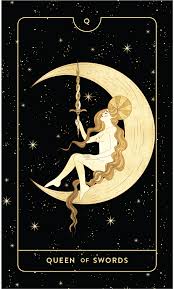
I wasn’t able to work on my second novel until 2002. I had been studying true crime for the past decade, increasingly intrigued and absorbed: here were ready made, real plots that explicated the very questions of identity, self-presentation, power, truth will and justice that had always obsessed me. With Find Courtney, I was off and running – and to my intense artistic satisfaction, Woman Into Wolf, Depraved Heart and I’ll Sleep When You’re Dead quickly followed with fabulous reviews. Unimpressive sales led me back to the theatre, where one forges a more immediate connection with the audience. With every play, The Honey & The Pang (Emily Dickinson), Queen of Swords (murderous stepmother), Cuck’d (Othello), Caving (quantum physics), Rough Sleep (the multiverse), The Dalingridge Horror (Virginia Woolf) I find out more and more about myself and the world I’m living in. Writing full-time to please yourself is the greatest joy there is.
(Lectern flanked by flowers. A screen with a glamour pic of a young man in his late 20’s- wistful, engaging – someone you’d have liked to know. A young woman, mid twenties, dressed for a funeral in a very tight fitting suit, steps up on the stage and picks up the mike with a becomingly abashed air of charm & professional sweetness)
MARCI Hi, I’m Marci, and I’d like to say a few words about Glenn Godiver. I never saw myself as a person who gives eulogies, but Glenn and I had that kind of relationship. We called it The Mutual Autopsy Society. You do me and I do you.
(She acknowledges audience laughter)
Right? He was so funny! Sometime it took me like a minute to get the joke!
(Trying to be serious.)
If you knew Glenn, you were one of the very, very privileged few. He was a private guy, and although he had more friends than anyone I’ve ever met, he didn’t let just anybody in. But he was SO worth knowing! I mean, what a guy! Am I right? Every guy wanted to be Glenn Godiver and every girl wanted to get with Glenn. At least that’s what he would say!
(Laughs)
Naw, you couldn’t stay mad at that guy. At least I couldn’t. What a sweetie pie! He was as sweet as pie.
(Tries to chuck the photo under its chin. Presses a button on a remote and the pictures change to Marci & Glenn together or with groups of young people. Traveling, partying.)
There he is, right where he always wanted to be, the center of attention. He wouldn’t leave while the party was still going on! When I was going through my pictures I can’t tell you how many I found where there I was on the sofa asleep, waiting for Glenn to feel ready to go home. There’s one! Because while we were dating those six happy, happy months, I was always looking for some alone time. Not just face time, face-and-body time.
(Inappropriate picture, obviously sex. MARCI freezes on that picture)
Uh oh! How did THAT get here?
(Fake embarrassment. She zooms in on just the faces, which get a little blurry.)
That’s better! I mean, this is the family hour. Lots of little ankle biters wanting to pay tribute to Uncle Glenn, as well they should. As well they should. So where was I?
(Takes her jacket off and hangs it on the mike stand. Underneath a skimpy lace camisole)
Is it just me or is it getting hot in here?
(Comes to sit on the edge of the stage, making herself comfortable. Fake radio DJ voice)
I’m Yvette DaBomb – welcome to Pillowtalk. It’s dark outside, rain is falling and it looks like we’re locked in here together for the duration, so why don’t I show you all a good time?
(Tinny laughter)
Yeah, without Glenn the party will never be the same. I remember when we broke up – I broke up with him, contrary to the story I KNOW he was telling some people – it was all about issues. Trust issues. He used to say to me –
(bad Nicholson impression)
You can’t handle the truth! And I told him you’re the one who can’t handle the truth!
(Starting to get steamed)
Telling everyone you were looking for a nice girl so you could settle down, I mean, that wasn’t true, was it? He just wanted to see inside every pair of undies on the West Coast. And I mean, that’s OK! I say, God bless him! But don’t go around telling me who I can hug. Who I can text! Who I can talk to!
(Reining herself in.)
Oh, he had issues. But I liked him just the way he was. I accepted him. I think that’s what love is; you’ve got to accept people so they can accept themselves. But Glenn was a difficult person to satisfy. He was always looking – you know – for that next little “tweak”. There was always just something that needed fixing, something that could be better. “Added value”, he called it. Am I right? That’s why he was such a successful entrepreneur; he was always looking for ways to add value. Like he wouldn’t tell me my breasts were too small; he’d always say, “Look at these.” And he’d show me those pictures on his phone. I know the police said afterwards there were no pictures of breasts on his phone and of course we don’t want to remember him that way. But I know what I saw. Glenn was a “seeker”. Always searching for…something better.
When I got the implants he was so happy at first! 32B to a D is a big jump!!
(Cradles her breasts – shown off to good effect in the flimsy camisole.)
He was like a kid with a new toy, that’s for sure! He said he only wanted me to be admired, he wanted “the real Marci” to come on out. He would tell me some of you – don’t take this the wrong way – were saying behind my back that I wasn’t right for him. I have to say you guys were making it hard for me to be your friend what with all the back chat I was hearing.
(Works to calm herself)
Naturally I wanted to check his emails and his Facebook page after he was saying things like that! And we trusted each other with the passwords – in spite of what he probably told you – plus he always used his dog’s name – Welliver – as his password and you just don’t forget a thing like that. Imagine my shock when I found out those implants he had begged me to get and then to show off to his friends – were another point against me! “Not exactly wife material” people were saying! That kind of thing!! Yeah, I was upset at first and it led directly to our breakup.
I mean, he was setting me up! Am I right? He was setting me up to fail! Then I saw him doing that with other people he said he was “mentoring” (air quotes.) This is the hardest thing to admit about Glenn – that he acted like an asshole sometimes. Like his left hand wouldn’t see what his right hand was doing! I put it down to his competitive spirit. Just like Welliver – that dog never could resist using his teeth! Grrrr! Had to get his teeth around something!! I mean, he’s a dog! So when he plays, you expect him to play rough.
There I was stuck with this big bill! Not to mention getting a full Brazilian every two weeks – I mean was that for him or me? Oh, you don’t mind the pain, he tells me. You like it. I mean, why would you do this otherwise? Why would anyone?
I told him flat out, I’d do anything to please you. I admitted it. What’s it gonna take? You’ve got me, so tell me what to do. Glenn could be generous, but usually he was more generous after he’d been satisfied. You know what I’m saying. I mean the guy would give you the shirt off his back – he did give me the shirt off his back – of course I was naked at the time! (Laugh). He took my clothes! But he did have a way of dodging responsibility. First guy into the restaurant but when it came time to pay the check, I mean, where was he? Am I off course here? I felt he leaned just a little too hard on his friends, didn’t you? But we forgave him! He said to me, you can work it off. Clean my house and …other ways. Called me his little porn star! (More sex photos) Then he sold me that crappy car that never worked! But I still had to pay for it! I have to say that made me kind of uncomfortable. Goddess or porn star, Glenn, which is it? Oh, he was itching to make a porno! Said, we’re all going to make a million dollars! Doin’ what comes naturally!
I warned him, Glenn, if you do, the jury will come back against you! Everyone will know you’re not the saint you pretended to be. But he says to me, Marci, there are no male sluts. There’s female sluts and goodtime guys, that’s what and there’s no coming back from it. (Flips through the pictures in frustration, looking for a good one.) Not like breaking up made any difference because we couldn’t stay away from each other! We were combustible, all right. He always said he never came so hard with anyone else. Even jacking off! It was always me he wanted to think about.
So we forgave him! Didn’t we always? I know he was pulling these same stunts with other girls – you Jeannie and you Rebecca – he showed me your emails & texts. Bet you didn’t know about that! But who could say no to this guy? Look at that! (Zoom close-up of the photo) I mean, who could resist those eyes? Awwww! That’s what he seems to be saying. Awww! Make me! Ya gonna make me?
(Switches pictures)
I know we were all getting sick of THAT picture.This one was taken the day he died.
(Naked torso making the “strongman” gesture)
He was so proud of his body – as well he should have been. He was in the gym two hours a day turning ugly flab to rock hard muscle. Sweat is fat crying, that’s what he used to say! Oh, he used to slap my ass to get me going! Beat my ass until it hurt. Clocked me too, once, till I saw stars. I’m not saying I didn’t deserve it sometimes. We knew how to push each other’s buttons. He was easy to tease because he had this fake persona and he wouldn’t admit that he had. I mean, I had lost everything– put all my skin in the game – he made sure of that. I said, “I’m all in.” I was completely dependent – but he was still pretending he was free as air!
I forget whose idea it was to take these pictures.
(Several shower photos).
They’re good, right? I mean this could be an Old Spice ad! “Habit Rouge” is what I mean to say. That’s the stuff he liked. Called it his “hunting coat.” But he did need new photos for his page because he was so much better toned. He was bench pressing like 260 – he could lift me with one hand. I have a photo of that somewhere here.
(Shuffles through the photos – some of them are crime scene.)
How did THAT get there?
(Fake surprise.)
Oh, that’s right. I’m helping the police. It’s something only I can do, because I was closest to him. I was the last to see him alive.
(Puts on professorial glasses, takes out a laser pointer)
Look at this. Don’t you think there had to be at least two murderers? That’s the first thing I said to them. I mean, who could take advantage of this guy, he was so strong! I’m surprised they didn’t wait till he was asleep – you know, and vulnerable. But the police think the attack started right here in the bathroom. You can see there’s a shell casing from a 25 caliber there on the tiles. So she shot him, I guess. Or that guy did – you know, the people that broke in. Glenn was in trouble with lots of people he owed money to. He had all these sketchy roommates and then there were the thousands of girls he’s disappointed! Looking for a wife!
(snorts in disbelief)
What a line! “The perfect girl to share a family and kids. Happily ever after. You know, he said that after death families are raised up together and come together in heaven. I don’t know who he’s with now, though, since he spread himself so thin. He did have a rough upbringing you probably all remember – he talked about it enough. Inspirational, that’s what it was. But he couldn’t get away from that family fast enough.
Who knows? I’d really like to know how heaven works. Maybe you get to select your own company. Bring anyone you want! That must be where he is, don’t you think? Because he suffered when he died. Heaven’s the right place for those who die young. He didn’t get the chance to do the really terrible things – you know those things the living regret, those things we can’t take back or ever undo.
But the first shot didn’t kill him – you can see here where he went and stood over the sink, probably trying to figure out what had happened. You’ve got to ask yourself, what did he see, there, looking in the mirror? A guy whose pretty face was shot away? The police are being real boneheads about this, saying the shot came last! I mean, I wasn’t there, but ask yourself, what kind of sense does THAT make? Who breaks into a house to attack a guy in a shower with a knife? It’s just the stupidest thing that I can think of. But have it your way, Officer Malarkey.
(Rolls her eyes.)
You’re the professional! State-sponsored. servant! Twenty years of crime scene reconstruction! I’m just a girl who loved the victim, who lived there and cleaned the place and picked up after the owner! Naturally my DNA is everywhere. I cleaned up the dog poop too, if Glenn was too lazy to walk Welliver. Dogs need walking twice a day! Right! But I couldn’t be there every minute! I mean, I had a life, too! I have bills to pay! I had to work! I was trying to have a life too! I even joined Linkups because I said, if you can date, I can date. You know what he said? He said, “I’m not comfortable with that.”
(Mimics Glenn)
He made damn sure I texted those guys I wasn’t coming! “My ex isn’t comfortable with that!” Then I asked him, so when are you going to GET comfortable with that? Don’t I deserve a little hottie of my own? Somebody taking care of me? How many girls does one guy get?
“When I get married” he said. “You can be bridesmaid at my wedding! I’ve got my eye on the perfect girl – she’s saying no right now” – he meant you, Kira – “but I’m the guy that turns No into Yes.” And he was, wasn’t he! He so often was. That was his rep, all right. He always knew how to change your mind and make you want it, that thing you said you would never do. He kept digging till he got what he was after.
He asked me, “what am I doing wrong with Kira? How should I play this? She says she only wants me for a friend!”
I did wonder if he’d met his match. What do they call that – the Murphy effect? If you leave every territory after you’re finished with it, looking for new fields to conquer, I mean, eventually you’re going to fall off a cliff! Am I right? Pissarro and Cortez and all those guys! Stepped off the world! Right into a pile of skulls.
He probably would have made you marry him Kira, whether you wanted to or not! You’d wake up the morning after, asking, “What just happened?” I say you dodged a bullet! But nobody dodges every bullet and not in a tiny enclosed space like that shower. Got him right in the jaw till he was spitting out teeth. They say those low caliber bullets ricochet around in a person’s head. I mean, this one bounced right off his skull! Under the skin. He has hardheaded, was Glenn! Proud of that hardheadedness, too!
(Raps on her own skull.)
Don’t be such a pussy, he used to tell me! You gotta be all business if you plan to get things done! The police say those low caliber bullets are the choice of mobsters. You know, mob hits. “Execution style!” I told them, “Look for bill collectors. He was having trouble hanging onto his house and blaming me cause my credit was in the toilet and he had to hire the moving van for my stuff.” But Officer Numnutz says, doesn’t your grandfather have a .25 that’s gone missing? I mean, WHAT kind of relevance can that possibly have? My grandfather can’t find his own teeth! Everyone has guns, especially around here. And people gravitate to the little, light ones. “Concealed carry.” But I’ve never even SHOT a gun. So don’t look at me!
So Numnutz says – I’m sorry, Officer Mendez, I see you over there but if you can’t tell the truth in a eulogy then where can you tell it? He says to me, Look where the guy ran down the hall. Follow the blood trail. So Glenn’s getting away and they came after him with knives. These are the defensive wounds – here and here – where Glenn grabbed onto the knife for a moment and held it. They’re slippery, those things, with the blood flying everywhere.
Here’s where they gave him the “coup de grace”. Slit his throat. I mean, probably, judging from the blood pool.
(Acknowledges audience gasps)
I mean, GROSS right? That’s what I said! Heinous stuff! So here –
(blurry photo of sock clad foot and bloody shoulder)
Here’s where she dragged him back to the shower. Now why would she do that, Officer Mendez asks me. Maybe she was trying to revive him, Officer Bananas, if that’s really your name. Trying to wash off all that blood. Forgive me if I can’t remember every little detail about everything. I’ve got stuff on my mind. I mean, my best friend just died! Died at the peak of his life! So how do I know what murderers would do?
Maybe he hit her. Maybe it was self-defense.
(Picture of Glenn working a punching bag)
You know, hit out at her and she was just defending herself. Like I tried to tell you, he was really strong. He owned guns too. Unregistered ones. Proud of that. I know I saw one somewhere. And he had to use a knife to cut the rope when he tied me to the bed. Oh, didn’t I tell you about that? I thought I did – it was all about that porno he wanted to make. He first wanted to shoot it in the woods. That was his big idea. Or maybe on the hood of a car in rush hour traffic! Impossible to reason with the guy. Shake some sense into him! What about the looky-lous! They’ll know about you, about us! What about Kira! What will she say? She’ll drop you like a hot potato. The cops say “everybody has an alibi”. Well duh! I was miles away! But do you think the people who – I mean the people who did this if it wasn’t professional – would even remember? I mean, you’d want to forget a thing like this as fast as you could, wouldn’t you? If you loved the guy? And everyone loved him. He was the sweetest, most thoughtful, most generous guy who ever lived.
(Fumbles with papers on the lectern, starts to cry)
Can we get an appletini up here? That’s what he always ordered for me. Appletinis. He said, “I like the smell.”
I miss him. We had so many plans. We were going to walk the Freedom Trail. Together. Before we die. We swore a blood oath. Everyone says that it’s fantastic, that you come back from that trip a different person.
OK. I see you asking me to wrap things up. To cut it short (throat slitting gesture) I’m getting the hook! Don’t worry about it. I’m used to it. That’s what Glenn used to say he loved most about me, that I knew how to laugh at myself. Before I go I wanted to lead us in a song. (Quavering voice) If you get to heaven before I do
Coming for to carry me home – come on everybody, you know this one! Tell all my friends I’m a-coming after you! Coming for to carry me home! Swing low – sweet chariot –
Since publication of my psychological thriller, Woman Into Wolf I find myself fielding two main questions: one, what is a psychological thriller, and two, where do I get my ideas?
I usually end up telling the story about how as a kid I added “motive” cards to the game of Clue. I just wasn’t satisfied with a “solution” telling us Mrs. White killed Colonel Mustard in the ballroom with a candlestick. Why? I wanted to know. What the hell possessed her? Psychological studies typically concern themselves with the wilderness of the mind, and the “thriller” description represents extreme adventuring where anything – literally – might happen.
Where I get my ideas is a much easier question. There’s never a need to make anything up. I am a devoted and fascinated reader of true crime. If anything, reality needs toning down to make it fictionally believable. Woman Into Wolf weaves three real cases together in an effort to answer the question, What possessed them? to a reader’s satisfaction.
Certain cases stick in my mind like pebbles while the pearls of fiction form slowly around them. I puzzle. I speculate. I analyze. One example shows what I mean.
On August 4, 1999 two young men from Boston hiked into Rattlesnake Canyon in New Mexico. Planning to make camp for one night before moving on. They were college graduates, best friends, “seeing the sights” on their way to California. One of the pair, a Jack Kerouac fan and an aspiring writer, was considering turning their adventures into a travel piece. He was the one airlifted out on Sunday, August 8 with “moderate to severe dehydration.” His friend left in a bodybag.
What happened?
The survivor told police he only stabbed his friend – two times – because his friend begged him to. Because of the planned brevity of their stay they had taken in only three small bottles of water, but got lost, became disoriented and wandered in circles. They left desperate notes for the park rangers, then became convinced the rangers were playing tricks on them. They were certain the buzzards overhead were just waiting for signs of manifest weakness to attack. We know this because they recorded this part in the joint travel journal they were keeping. Strangely, the dead man wrote nothing about wanting to die or asking his friend to hurry the process along.
The rangers were bothered by the survivor’s story. No one had ever become lost in this small park in its hundred year history. The rangers found the campers a ten- minute walk from the trailhead. After his friend’s death, the survivor covered the body with rocks weighing as much as fifty pounds. Why hadn’t that energy been used to climb the hill where the parking lot was clearly visible? The coroner determined that the six foot tall, 180-pound camper died just a few hours before rescue. If the murder hadn’t occurred, he would have undoubtedly been rescued with his friend.
But there was no legal need for extensive ratiocination: New Mexico law doesn’t give a free pass even to mercy killers. The survivor was indicted for murder. The survivor claimed to be chastened by his traumatizing experience but he also said that he had done the right thing, and even knowing what he knew now, he would do it again. The dead man’s family rallied round him; publicly stating that this was a tragedy for all of them, and there was no way this loyal friend would have intentionally harmed his buddy. The survivor’s lawyer first attempted a defense of temporary insanity (not allowed under New Mexico law, which requires insanity to be documented and of long standing) then went for “involuntary intoxication” – a legal defense – thinking of the salt buildup caused by a level of dehydration historically linked to hallucinations and poor coping skills. Incidentally, the judge rejected this defense.
So what happened? If you have any propensity for structuring psychological thrillers, your neurons must be collectively firing. This tragic scenario is like a two person play by Beckett or Pinter. It’s pretty obvious any question about who did what to whom is secondary to the problem of identity. Who were these people? Two young men who had always done everything right, by all accounts, in their families, at church and school, on the job, even in their intimate relationships. The dead man was on his way to California to attend graduate school. I don’t know about you, but whenever I hear about compulsive I-dotters and T-crossers I always picture people who are “outer-directed.” That means they’ve traditionally taken their life cues from externals – leaving their inner beings unexplored – possibly even unconsulted. In a good psychological thriller, what the internal voyager discovers in his subconscious is as much a surprise to him as to the reader. What this story makes apparent is that as soon as the outward signals were removed, these two young men fell apart pretty dramatically.
When the rangers found the survivor, he was waiting quietly in his tent, next to the cairn of stones he built over his deaf friend’s body. Often when he talked about ending his friend’s suffering, it sounded as if he was also ending his own. It was just easier to wait for rescue without his friend around. Therein, to my mind, lies Clue #1. These friends grew up together and did everything together, seemingly using their relationship as a sort of existential echo-location. I am I because you are you, and if you are there, then I must be here. It is the demanding drive for self-definition within each of us that causes us to sever – or at least yank sharply on – tether and lifeline alike. One of the friends was the leader and one was the follower. And it seems the leader had made a series of catastrophically bad decisions. We all know how hard that can be to live with – and to live down. In the noisy whistling of the leadership vacuum reproach becomes unbearable. In today’s reality-show world, increasingly it is only the public self that matters. Unknown failures can be literally “undone”. The Victorians understood this very well. In their day, “status preservation” was a major motive for murder in both the upper and middle class.
One of the questions the detectives had was why the campers tried to burn a sleeping bag for a signal fire within sight of a large dead tree. Surely a little arson is preferable to death? As it turned out, the sleeping bag was a failure as fuel. The bag had been chosen, the survivor said, because they had two and needed only one. Although everyone who knew the pair insisted they were complete heterosexuals, my mind does a little U-turn on this piece of information. The prosecution even tried to make much of the fact that they had once shared a girlfriend, only to be shot down by the complete lack of cooperation of the relevant witness. Once again, the fewer people around with first- hand knowledge of our psychic and emotional dissonances, the easier we may find it to go on living.
I also think we live in an “instant gratification” society where the only strategy for change we are used to is the “make it stop” wish. “This isn’t any fun, let’s not do it any more.”
“Yeah man, this is getting to be a real drag.”
But how to make it stop just when we want it to, if there are no buttons, no switches? How dare the cosmos be so unresponsive when we’ve decided we need a new game? This question – the relationship between reality and one’s demands — leads us further into the psychological wilderness.
The young men from Boston listened to the ranger’s instructions with only half an ear between the two of them. They failed to take the recommended amount of water, they searched for non-existent campsites and they abandoned their topographical map because they couldn’t read it. We all know that any sense of superiority carries shadowy concomitants of guilt and fear. If others knew our superiority, they would resent us. Even hate us, and I know that because in their situation, I would feel the same. Unlike Jack Kerouac, these young men grew up with an easy confidence that law existed to protect their rights and privileges. But their education had taught them that not everyone is so fortunate.
Hence the stated fear that the rangers were playing tricks on them, moving trail markers and teasing the campers with unreachable bottles of water. By the third day the young men feared that the rangers would cover up their deaths to hide their own incompetence.
And then there are the buzzards, the pitiless “eyes in the sky” waiting to peck out their own eyes. What do you do when death is inevitable and the universe doesn’t seem to care? The ancients handled this question through sacrifice; demanding the right to pick the next to fall. It is an insult to the magnificence of our human capabilities to let the buzzards choose.
Since a psychological thriller must of necessity concern itself with subjects’ lives as a whole, it is a real question where to start. Author William Goldman’s advice, to start “as late in the story as possible” is good, I think. In this case, I can’t help but feel that the real story begins afterwards, in the throes of survivor’s complex. The surviving camper was sentenced to fifteen years. He served fifteen months and has now gone back to his blamelessly unexamined life, in spite of being handed a literary subject Kerouac would envy and perhaps only Hemingway could handle. One can’t help but wonder what his days and nights are like. The Apaches who still protect Rattlesnake Canyon could have told him, when you kill something, it becomes part of you forever.